
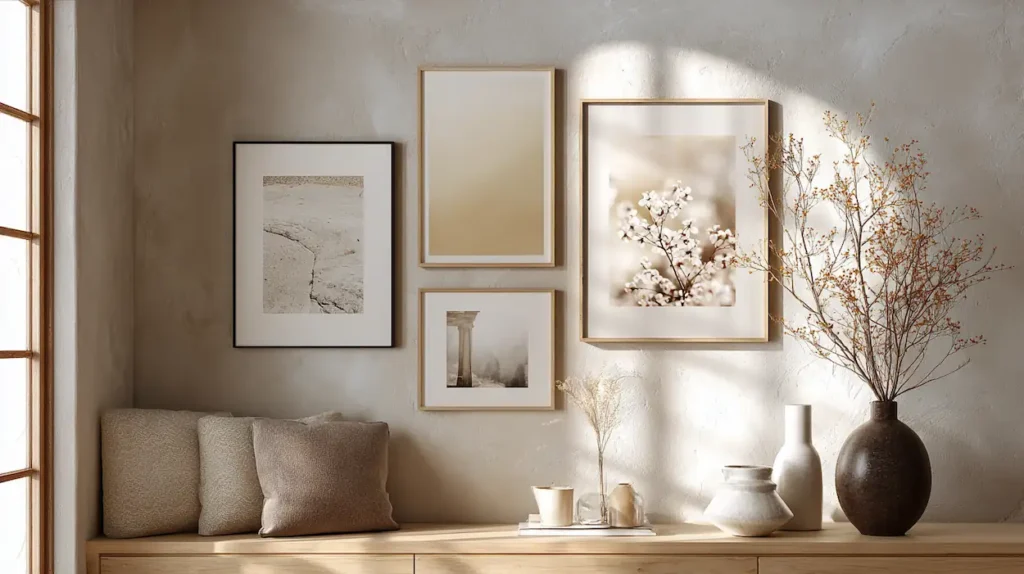
You don’t want holes in your walls.
You want expression without commitment.
Wall art without nails isn’t a compromise—it’s a visual strategy. One that keeps walls clean, flexible, and emotionally light.
These no-damage options don’t just protect your space. They change how a room moves, how it breathes, how it adapts to you.
Below, you’ll see how walls gain presence without force.
How art floats instead of being fixed.
And how subtle systems create freedom instead of limitation.
Wall art without nails transforms walls into flexible visual surfaces
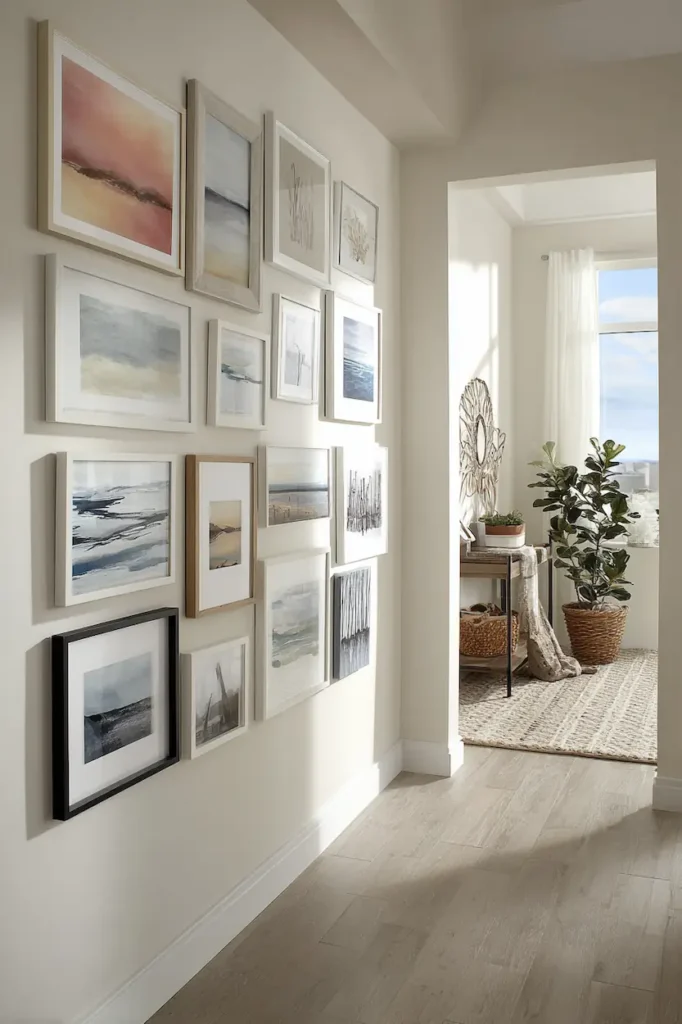
There’s a quiet relief when a wall doesn’t feel punctured.
No anchors. No scars. No permanence.
Nail-free wall art turns the wall into a living surface—one that can evolve with mood, season, or identity shift.
Instead of asking “Will this be here forever?”
The wall asks “What feels right right now?”
This flexibility changes the energy of a room:
- Art feels lighter
- Spaces feel less controlled
- Visual storytelling becomes modular
The wall stops being a boundary and becomes a backdrop for experimentation.
Adhesive systems create clean lines without visual tension
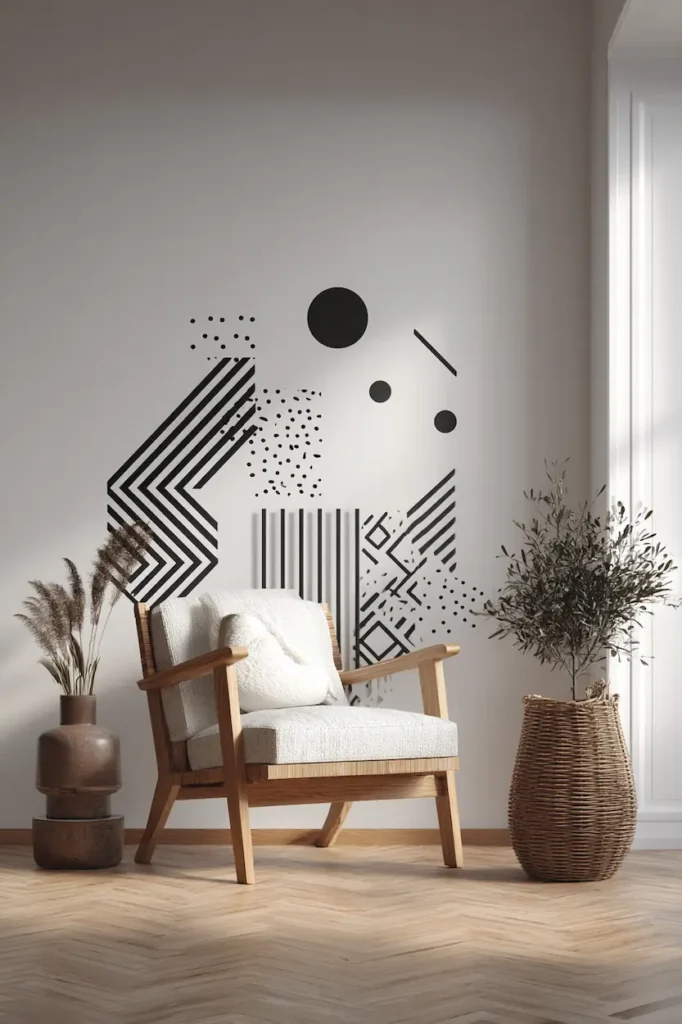
Adhesive hanging systems are misunderstood.
They’re not temporary hacks—they’re precision tools.
When chosen correctly, they disappear visually and emotionally.
The key is alignment.
When art sits flush, level, and balanced, the mind doesn’t question how it’s held. It simply accepts the composition.
Adhesives work best when:
- The frame is slim
- The wall color is calm
- The spacing is intentional
The result?
A wall that feels designed—not improvised.
No visible effort. No visual stress.
Nail-free systems work best when the visual foundations are already in place. If you want a clearer sense of spacing and balance before choosing your method, Hanging Wall Art: Easy Rules for Beginners gives a calm, simple framework to build on.
Leaning wall art introduces depth without attachment
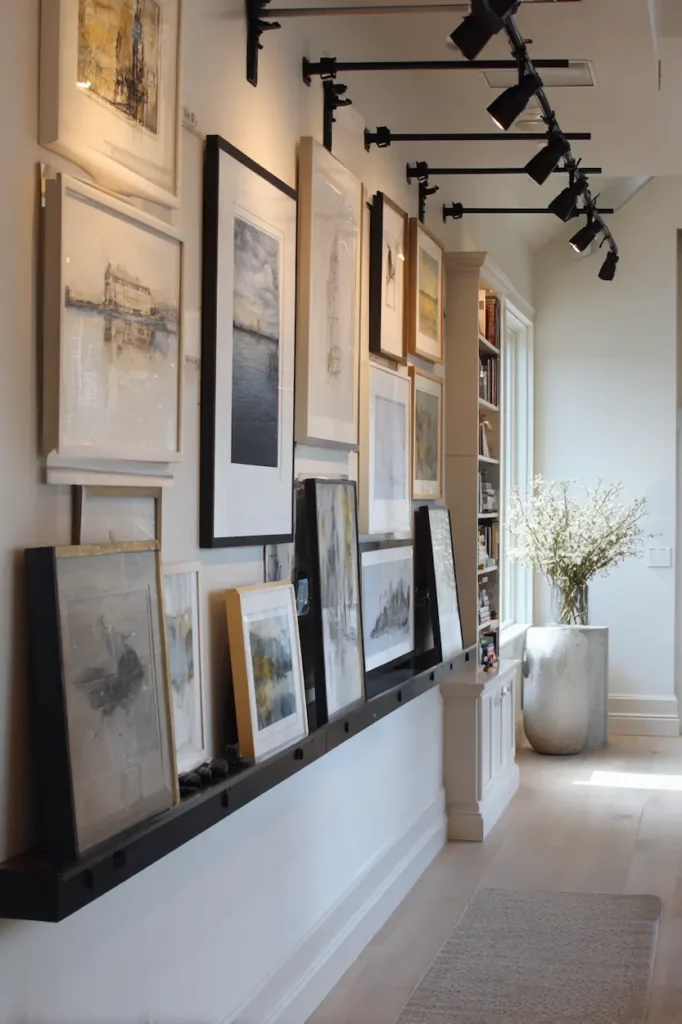
Leaning art is about trust.
Nothing is fixed. Nothing is forced.
The art rests. The wall supports.
This approach works especially well in:
- Bedrooms
- Hallways
- Creative studios
- Living rooms with low furniture
Leaning pieces add depth layers—foreground, wall plane, negative space.
The wall feels less flat.
The room feels more editorial.
It’s not about hanging art.
It’s about placing presence.
Magnetic and rail systems redefine permanence
Magnetic strips and picture rails introduce a subtle architectural rhythm.
They don’t scream for attention.
They structure it.
These systems allow art to shift horizontally or vertically without leaving marks—perfect for those who rotate visuals often.
What changes visually:
- The wall gains a linear anchor
- Art becomes part of a system, not an object
- The room feels curated, not fixed
This is ideal for:
- Series of prints
- Photography walls
- Evolving collections
The wall becomes a gallery surface, not a static plane.
Textile and lightweight art soften walls without pressure
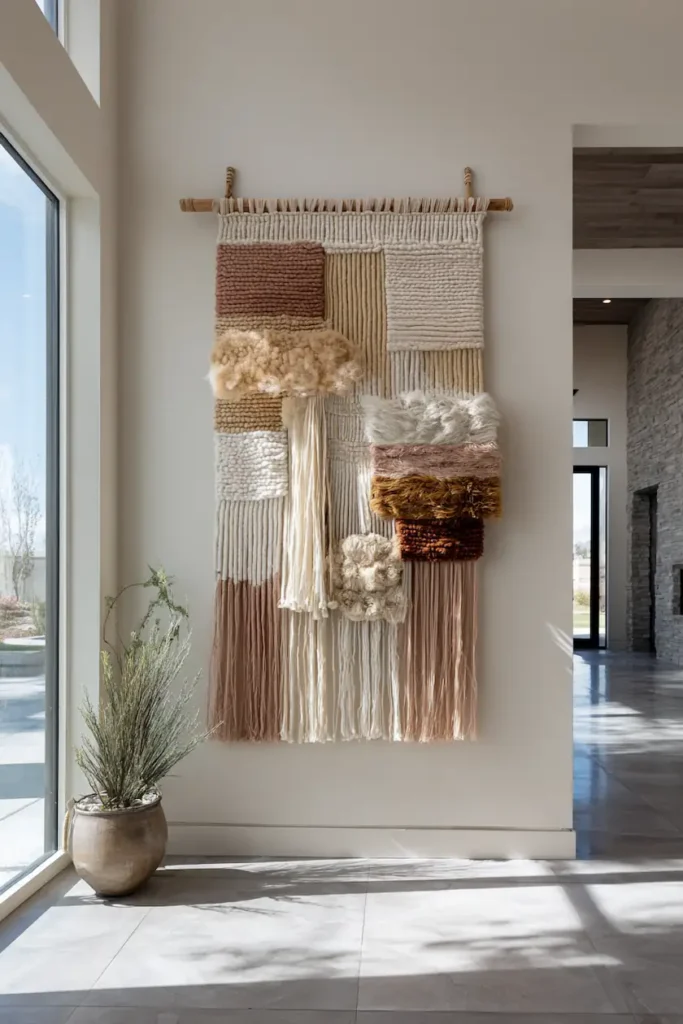
Fabric art, banners, woven pieces, and lightweight canvases shift the wall’s texture rather than its structure.
They absorb light.
They soften acoustics.
They reduce visual hardness.
Because they’re light, they can be mounted with:
- Removable hooks
- Fabric-safe adhesives
- Tension rods
This creates walls that feel warm and inhabited, not engineered.
Especially powerful in minimalist or neutral spaces where texture carries emotion.
Temporary wall art encourages emotional freedom
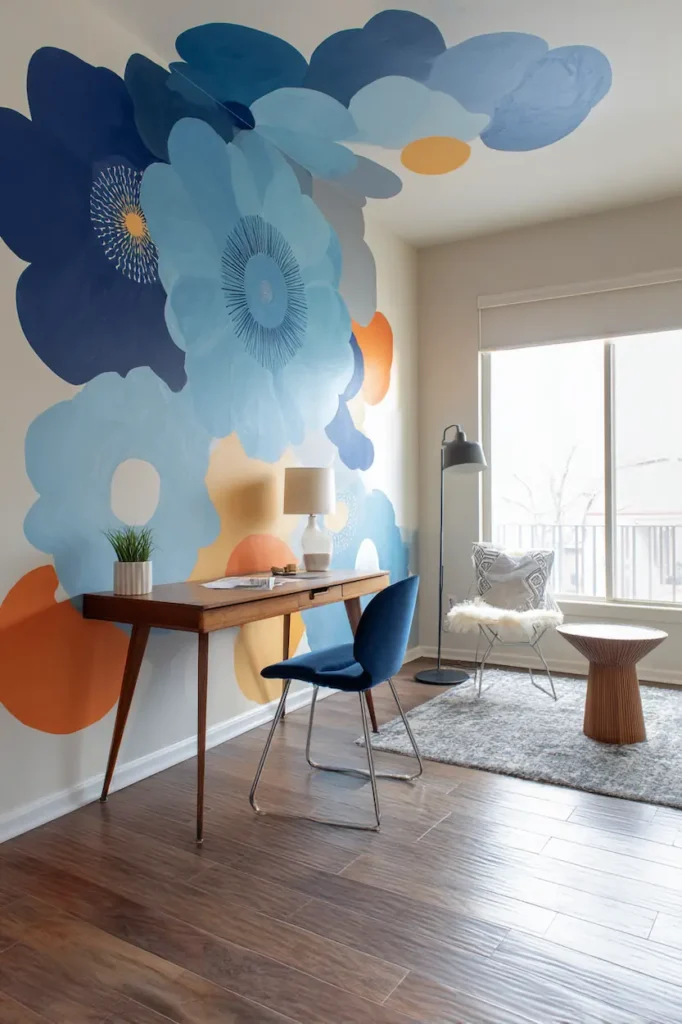
When walls are damage-free, decision fatigue disappears.
You stop asking:
“Is this worth drilling?”
You start asking:
“Does this feel right today?”
Temporary art allows for:
- Mood-based rotation
- Seasonal shifts
- Creative play
The wall becomes responsive.
Your space listens to you.
This freedom is subtle—but powerful.
PRACTICAL DESIGN TIPS
What actually works (and why)
1. Match weight to system
Light frames = adhesives
Medium frames = reinforced strips
Textiles = hooks or rods
Overloading is the only real failure point.
2. Clean before mounting
Dust and oils break adhesion.
A clean surface = long-term hold.
3. Think in compositions, not pieces
Plan spacing first.
Even removable art needs structure.
4. Avoid high-humidity zones
Bathrooms and kitchens weaken adhesives.
Use leaning or rails instead.
5. Test with paper first
Tape paper templates on the wall.
Adjust until it feels balanced—then mount.
These aren’t tricks.
They’re visual safeguards.
FAQ
Is wall art without nails secure long-term?
Yes—when weight limits are respected and surfaces are clean.
Does nail-free art look temporary?
Only when spacing and alignment are careless. Precision makes it permanent visually.
Can large art work without nails?
Yes, through leaning methods or rail systems.
Is this renter-friendly?
Completely. That’s the point.
Conclusion
Walls don’t need to be pierced to be powerful.
When art floats, leans, or rests—
The space feels lighter.
Your choices feel reversible.
Your home feels more yours.
Save the idea.
Not the holes.