
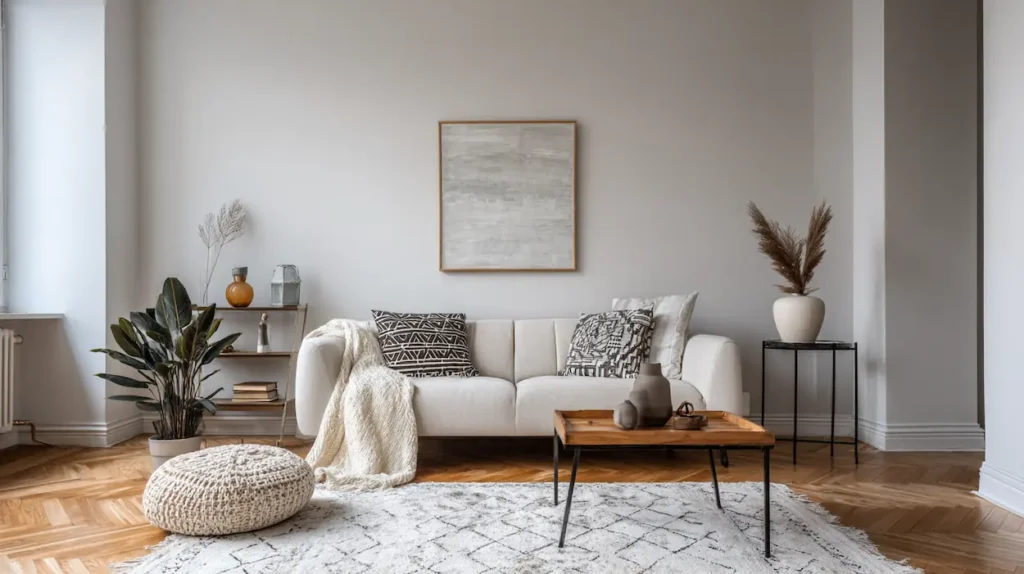
You don’t need more furniture.
You need the wall to start speaking.
A blank wall drains energy from a room. It flattens light, shortens depth, and makes even beautiful spaces feel unfinished.
Decorating a blank wall on a budget isn’t about filling space.
It’s about redirecting attention, anchoring the eye, and restoring visual balance.
Below, you’ll see how different wall choices quietly change a room’s mood — without shopping sprees, without design rules, without pressure.
Each section opens a new visual direction. Scroll until one clicks.
Decorating a blank wall on a budget transforms empty space into visual balance
A bare wall creates a pause that feels accidental.
When treated correctly, that pause becomes intentional.
The most affordable wall transformations don’t rely on objects — they rely on scale, rhythm, and contrast.
Large walls want one strong decision, not many small ones.
Small walls want repetition, not a statement piece.
Budget-friendly wall decor works best when it:
- occupies visual weight, not surface area
- aligns with existing light sources
- repeats a color already present in the room
Once this alignment happens, the room feels calmer — even if nothing expensive was added.
Posters and prints create instant structure without commitment
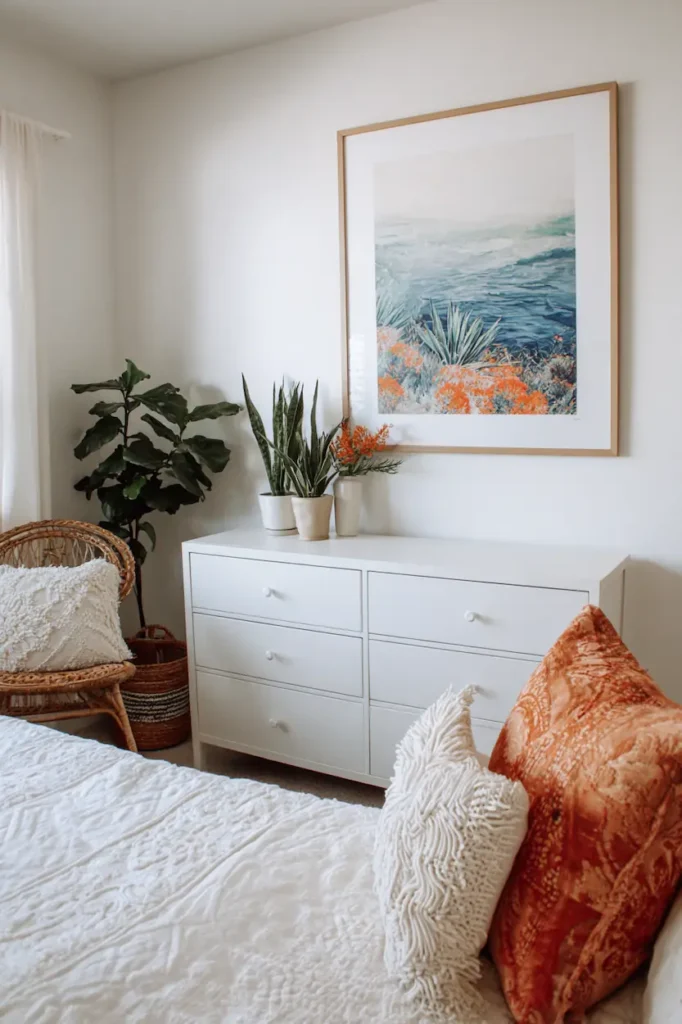
Posters are underestimated because they’re familiar — not because they’re weak.
A well-chosen poster introduces:
- vertical pull
- color anchoring
- narrative focus
On a budget, posters win because they’re replaceable. This makes the space feel alive, not frozen.
One oversized poster centered on a wall feels deliberate.
Three aligned prints feel curated.
Five mismatched frames feel accidental.
The trick isn’t the image.
It’s the spacing.
Gallery walls make budget pieces feel intentional
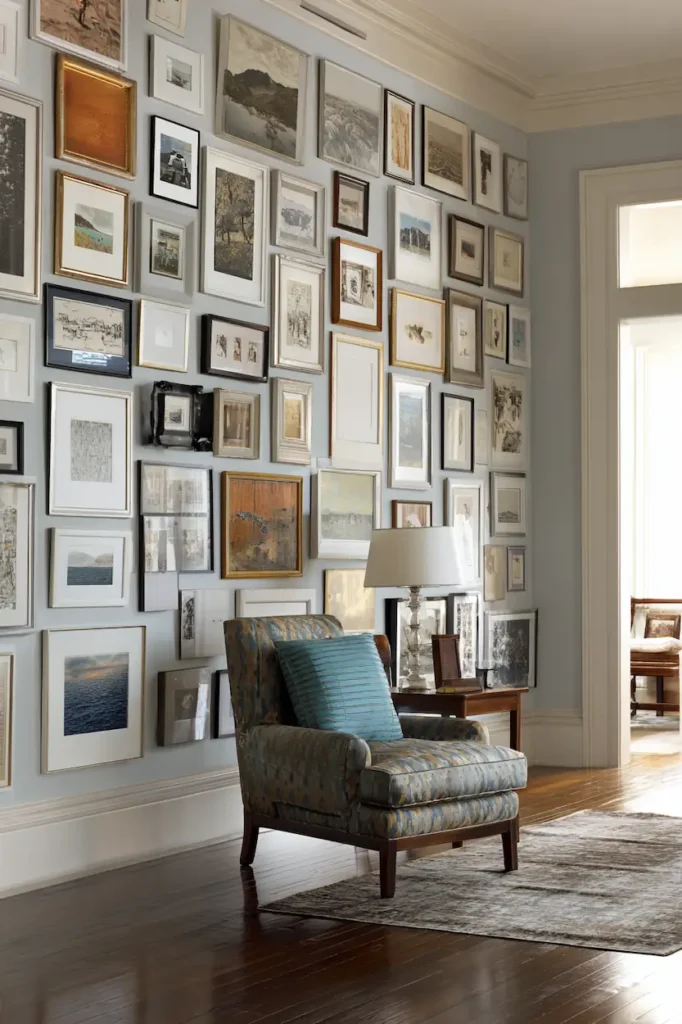
Gallery walls don’t hide low budgets — they reframe them.
When repetition enters a wall, the brain stops evaluating individual value and starts reading composition.
Effective gallery walls:
- use one color family
- repeat frame material
- follow a loose grid or vertical line
The power comes from rhythm, not variety.
A budget gallery wall should feel quiet, not expressive.
Let the wall breathe between frames.
Textiles and objects add depth when art feels inaccessible
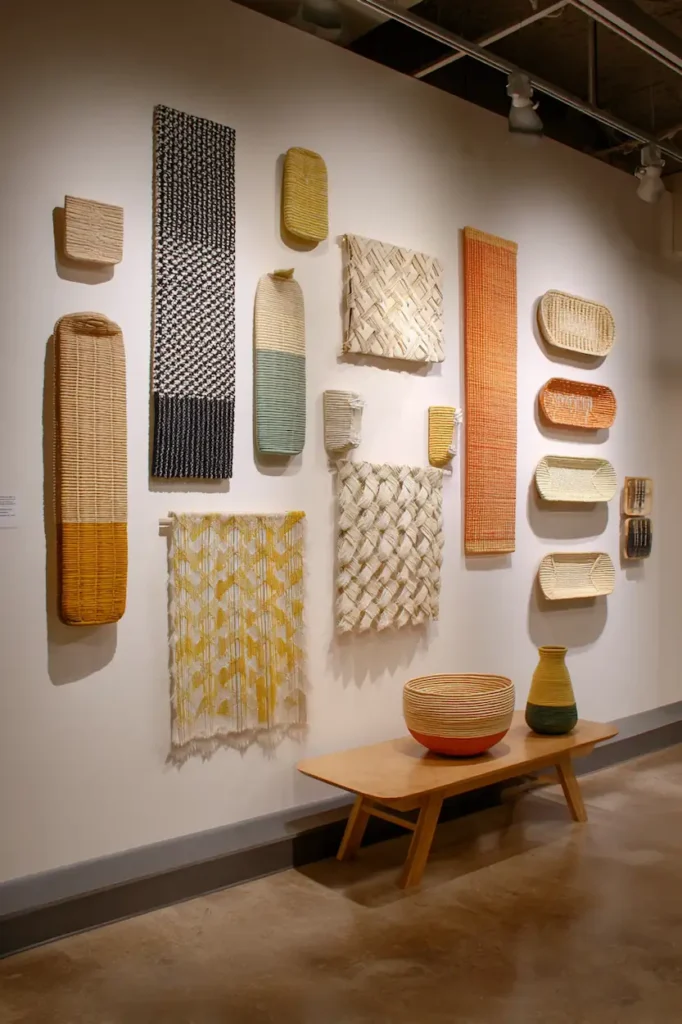
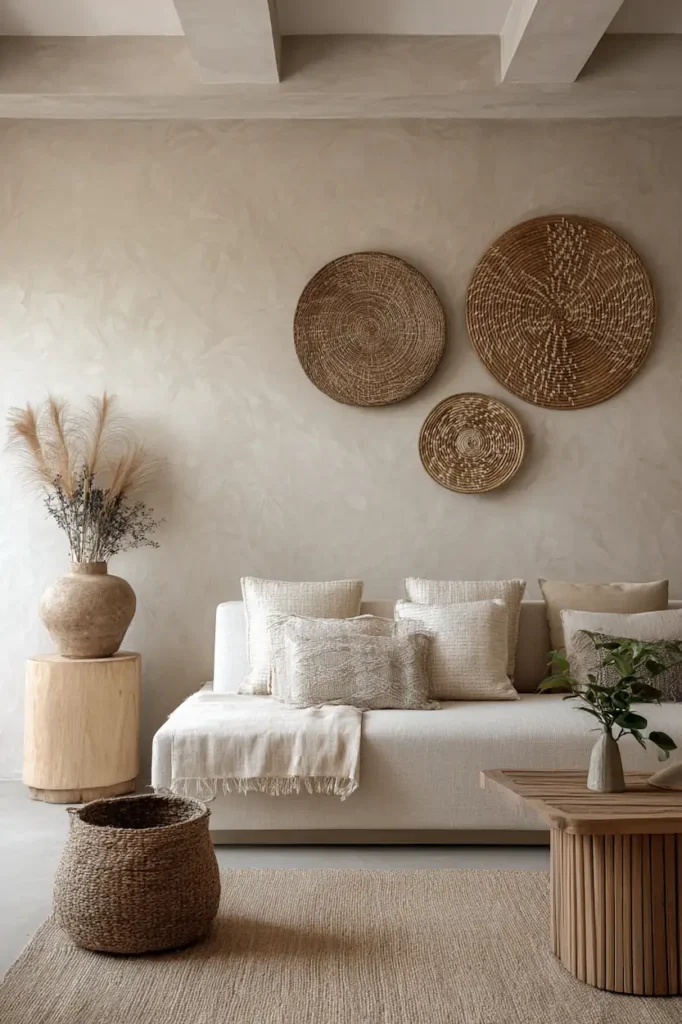
Not every wall wants paper.
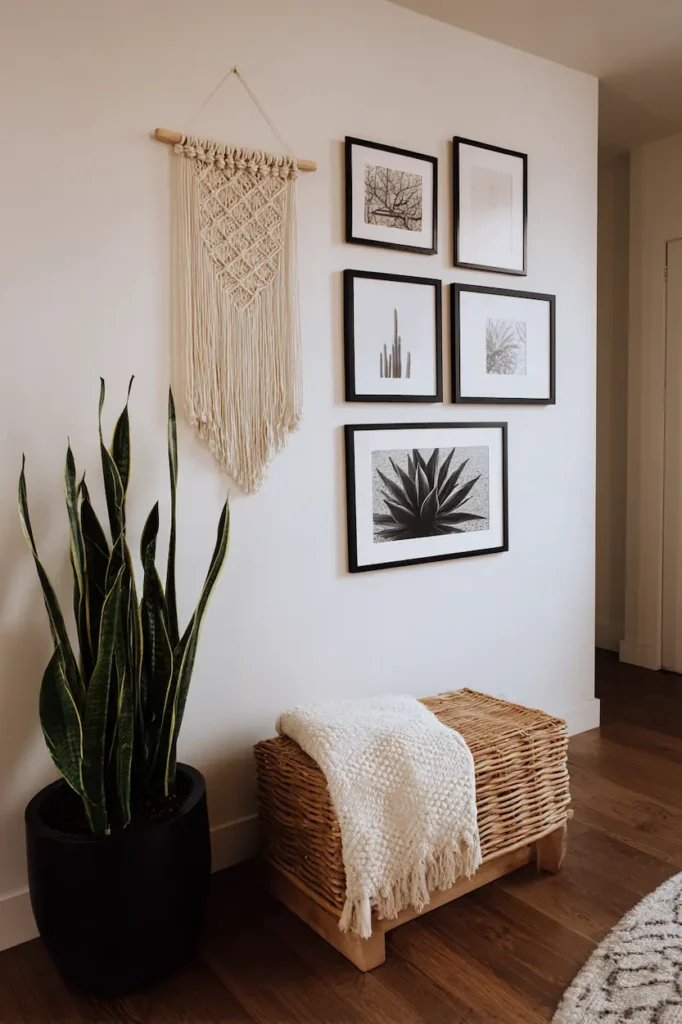
Textiles, baskets, and flat objects introduce shadow — the most underrated design element.
A fabric wall hanging softens acoustics.
A woven object breaks light uniformly.
A single sculptural piece creates pause.
These elements cost little because they aren’t labeled “art” — yet visually, they perform the same role.
When a blank wall finally feels balanced, it often connects to a broader logic of how walls shape the atmosphere of an entire home.
→ how blank wall decorating works beyond one room
Paint and contrast reshape a wall without buying anything
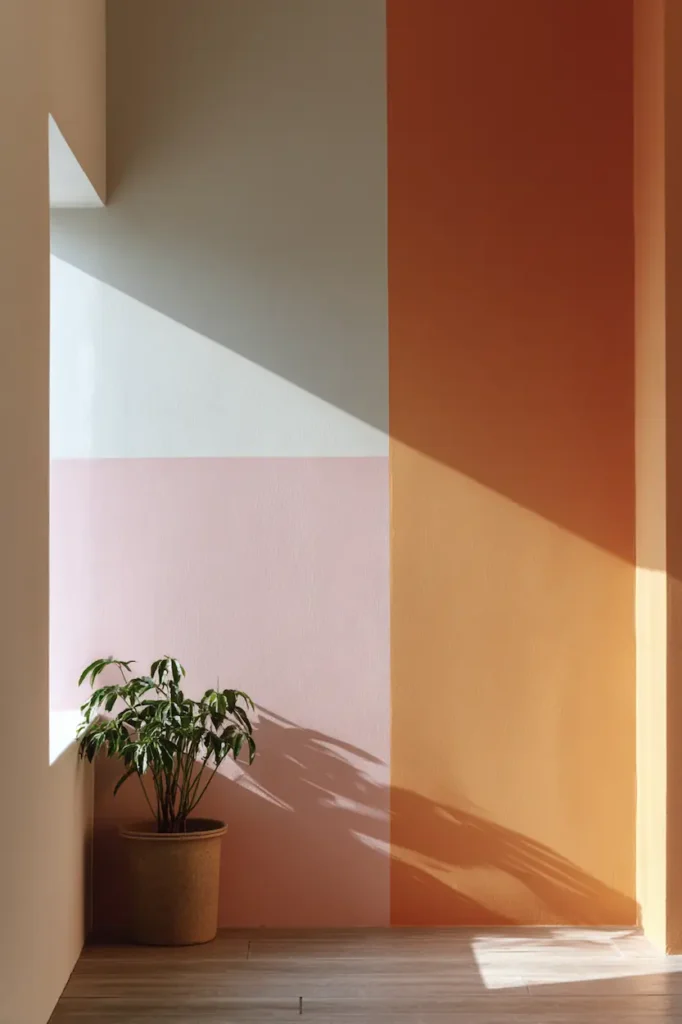
Sometimes the most budget-friendly decor is subtraction.
A painted rectangle behind nothing
A half-wall color block
A darker tone framing a corner
Paint creates architecture where none existed.
This approach works best when:
- the color already exists elsewhere
- the edge lines are clean
- the painted zone has breathing room
The wall stops being empty.
It becomes structural.
Practical Design Tips — What Actually Works (And Why)
Step-by-Step Visual Guidelines
- Stand where you enter the room
The wall should guide your eye, not interrupt it. - Choose one visual function
Anchor / Soften / Extend / Frame — never all four. - Scale before detail
Big shape first, texture second. - Leave negative space
Empty space is not failure. It’s contrast.
Common Budget Mistakes
- Too many small items
- Art hung too high
- Mixing frame styles randomly
- Filling the wall edge-to-edge
What Rebalances a Wall Instantly
- One oversized piece
- Repetition of one tone
- Clear vertical or horizontal alignment
FAQ
Can a blank wall be left empty on purpose?
Yes — if another wall carries visual weight. Balance matters more than coverage.
Are cheap frames always obvious?
Only when mixed. Consistency hides cost.
Is DIY wall art worth it?
When it focuses on shape and scale, not detail.
How do I know when to stop decorating?
When the wall supports the room instead of demanding attention.
Conclusion
A wall doesn’t need decoration.
It needs direction.
When a blank wall finally aligns with the room’s energy, everything else settles — furniture, light, even movement.
The best budget walls don’t look “done.”
They look resolved.
If one idea here stayed with you, that’s the one worth saving.