
A blank wall is never just empty.
It’s quiet.
It waits.
Sometimes it feels unfinished. Sometimes it feels peaceful. But most of the time, it feels like a missed opportunity — a surface that could carry mood, memory, or intention, yet doesn’t.
Decorating a blank wall isn’t about filling space.
It’s about revealing what the room already wants to say.
This is not about trends or rules.
It’s about simple gestures that change how a space feels — instantly, intuitively, emotionally.
Blank wall decorating turns emptiness into a visual anchor
A bare wall often pulls attention without giving anything back.
The eye lands there… and stops.
The moment you introduce a focal element — even a very subtle one — the energy of the room shifts.
Not louder.
More grounded.
A single framed artwork.
A quiet composition of two prints.
A soft-toned textile.
The wall stops being a void and becomes a pause.
A place where the gaze can rest.
This is the foundation of blank wall decorating:
one intentional presence is stronger than many decorative objects.
Start by reading the wall, not decorating it
Before adding anything, take a moment to observe.
- How much light touches the wall during the day
- Whether the wall feels tall, wide, or narrow
- What furniture already interacts with it
- How close you pass by it when moving through the room
Some walls want to be seen from afar.
Others are meant to be discovered up close.
A wall behind a sofa doesn’t need the same treatment as a wall in a hallway.
A wall flooded with light doesn’t ask for the same contrast as one in shadow.
When you read the wall first, decoration becomes intuitive — not forced.
One large piece often works better than many small ones
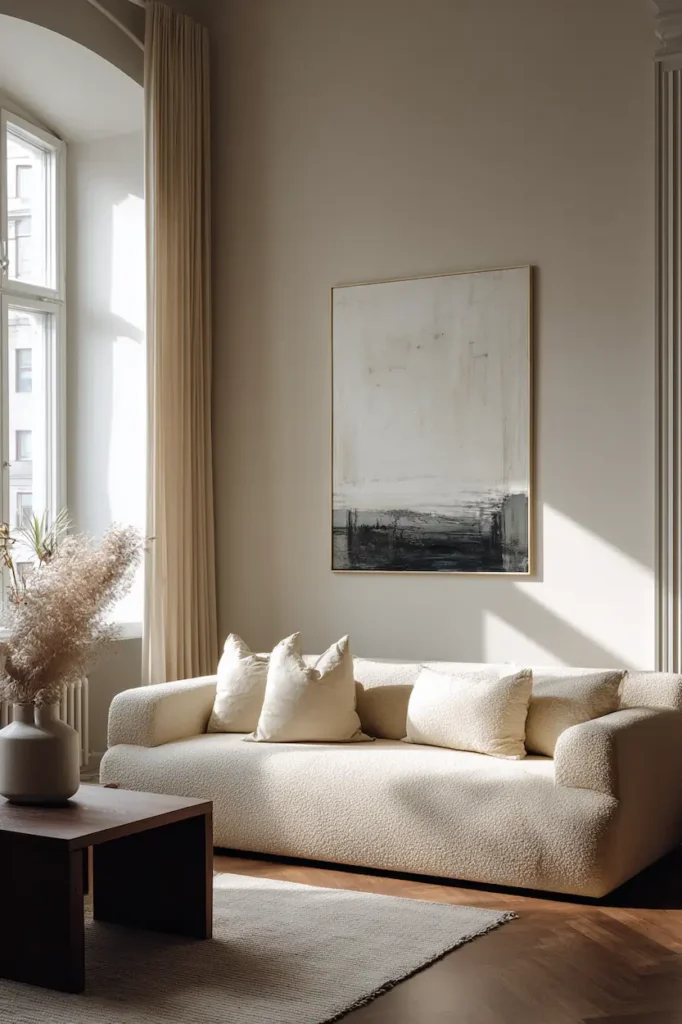
There is a quiet confidence in simplicity.
A single large artwork or print can:
- Calm visual noise
- Give structure to an open space
- Create immediate intention
Especially on a blank wall, scale matters more than quantity.
A piece that feels slightly oversized often works better than several smaller ones trying to “fill” the wall.
It feels deliberate.
Anchored.
Let the wall breathe around it.
Negative space is not empty — it’s part of the composition.
Gallery walls work when they feel intentional, not busy
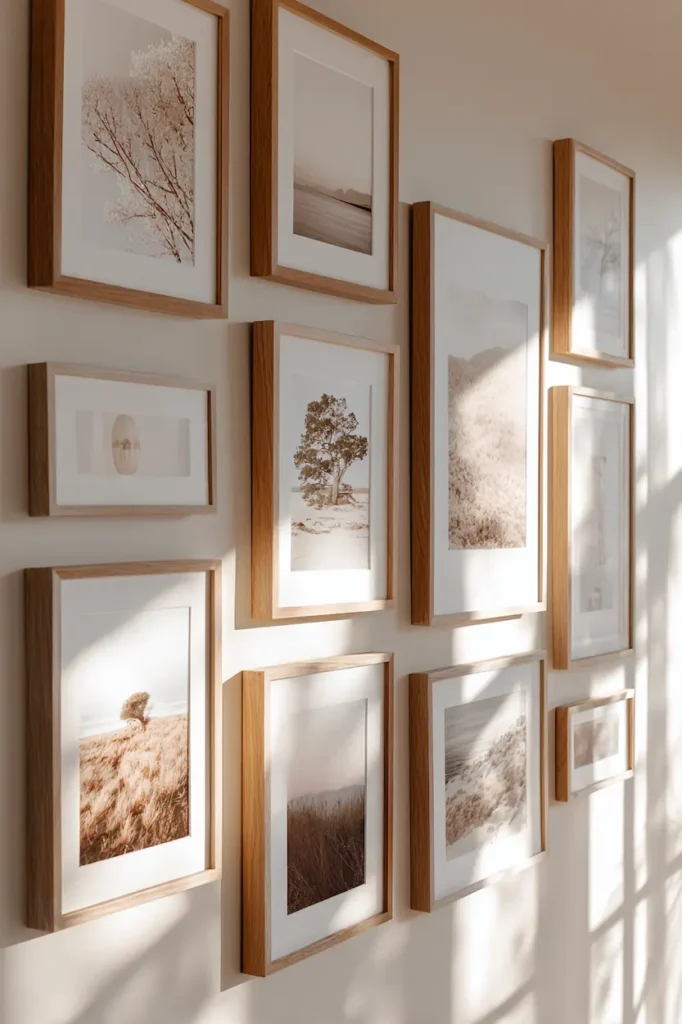
Gallery walls can be powerful, but only when they tell one story.
The mistake is not too many frames.
The mistake is too many ideas.
A strong gallery wall usually shares:
- A consistent color palette
- Similar frame styles
- A clear rhythm (alignment or spacing)
It doesn’t overwhelm.
It invites you to look closer.
Think of it as a visual paragraph, not a collage.
Each element supports the next.
If your wall feels calm, keep the gallery calm.
If the space is energetic, let the wall echo that rhythm.
Texture can replace art entirely
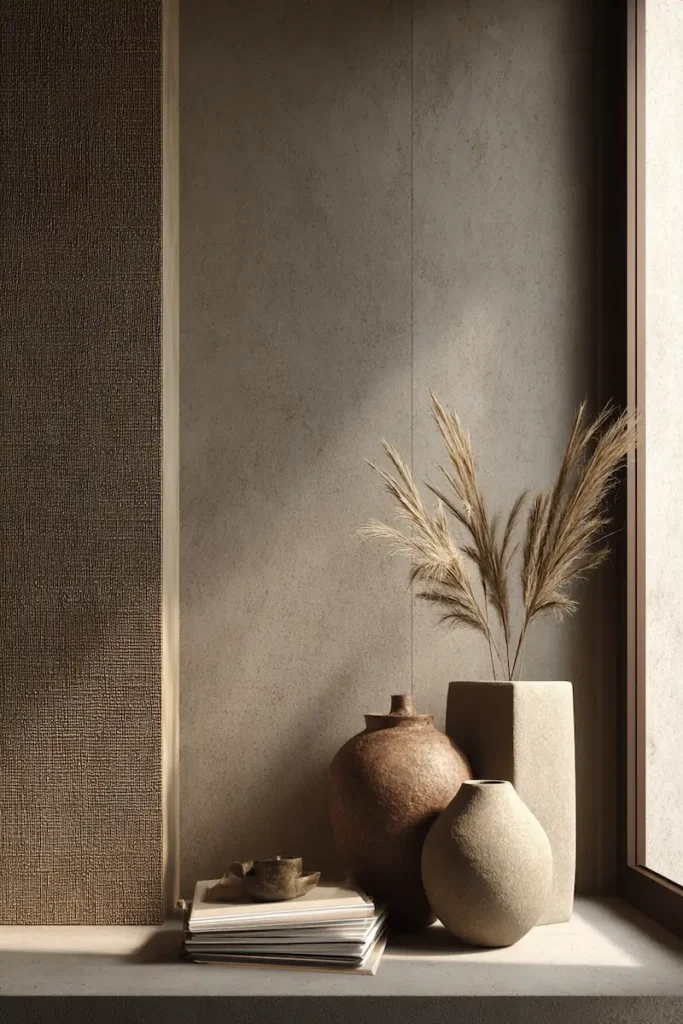
Not every blank wall needs frames.
Sometimes texture is enough.
- A woven wall hanging
- A sculptural object
- Subtle wood elements
- Layered materials with depth
Texture catches light differently throughout the day.
It adds life without adding visual clutter.
This approach works beautifully in calm interiors where color is minimal and materials do the talking.
The wall becomes tactile — even if you never touch it.
Color doesn’t have to be bold to be effective
Decorating a blank wall doesn’t mean dramatic contrast.
Soft shifts in tone can completely change perception.
- Warm whites instead of stark white
- Muted clay or sand hues
- Gentle greige or dusty beige
A barely-there color can:
- Make a space feel warmer
- Highlight natural light
- Frame furniture more elegantly
The wall doesn’t shout.
It supports.
Sometimes the most effective transformation is the one you feel before you notice it.
Vertical elements make walls feel taller and calmer
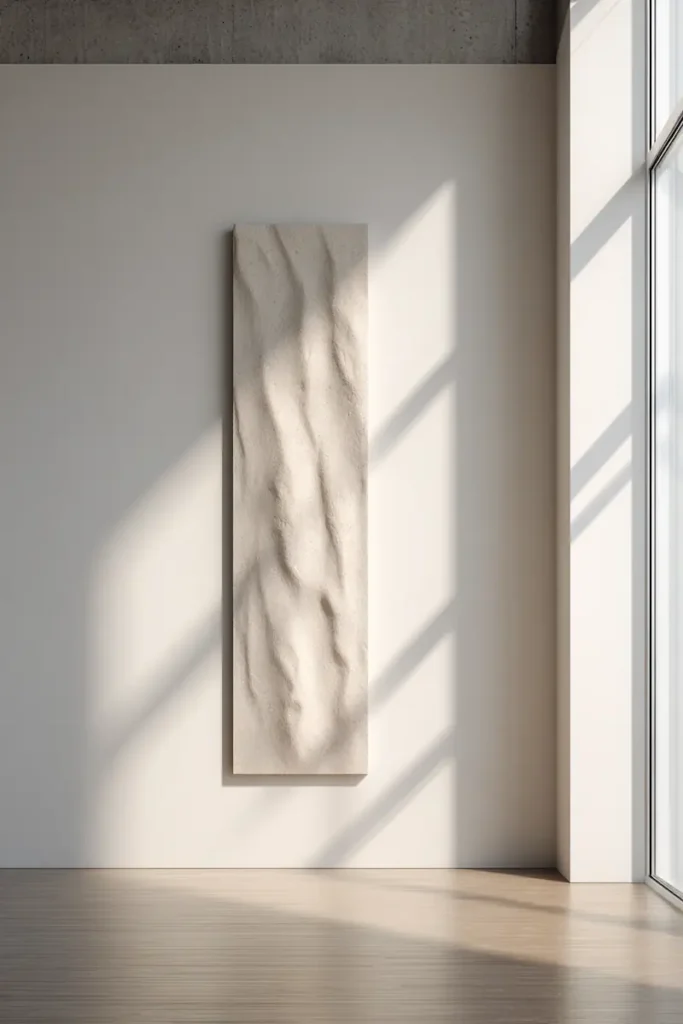
Blank walls often feel heavy when everything sits at eye level.
Introducing vertical elements changes that balance.
- Tall artwork
- Stacked frames
- Vertical shelves
- Slim wall sculptures
Verticality draws the eye upward.
The room feels taller, lighter, more open.
It’s a simple visual trick — but emotionally, it creates breathing space.
Walls don’t need symmetry to feel balanced
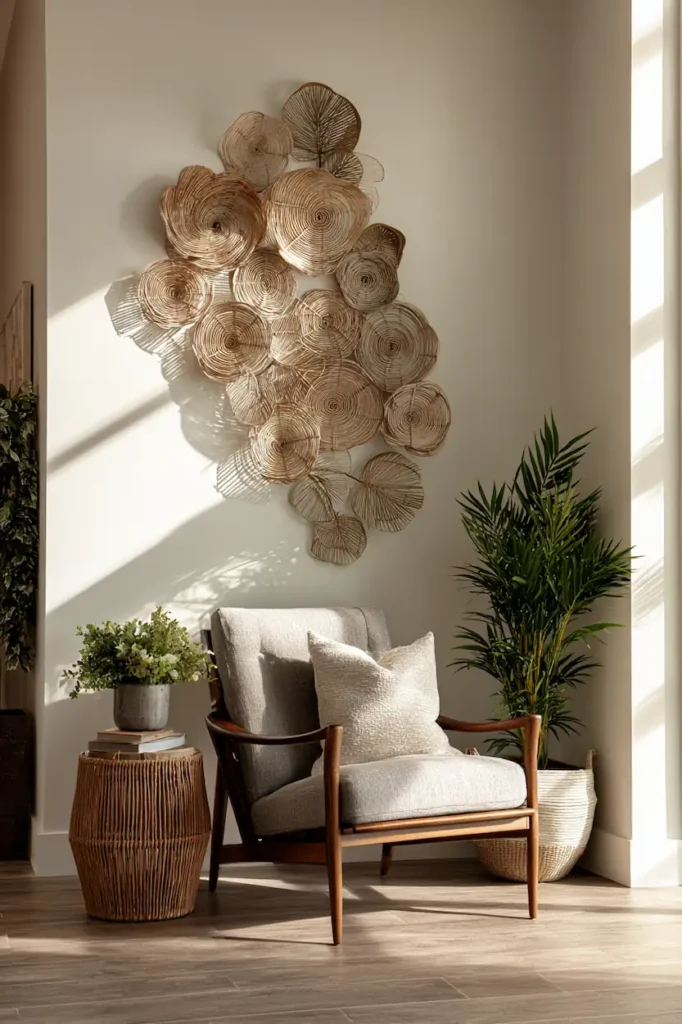
Perfect symmetry can feel static.
Balanced asymmetry feels alive.
A single artwork slightly off-center.
A piece paired with a floor lamp or plant nearby.
A wall that interacts with what’s around it.
Balance doesn’t mean mirroring.
It means visual conversation.
Let the wall speak with the furniture, not compete with it.
Negative space is part of the decoration
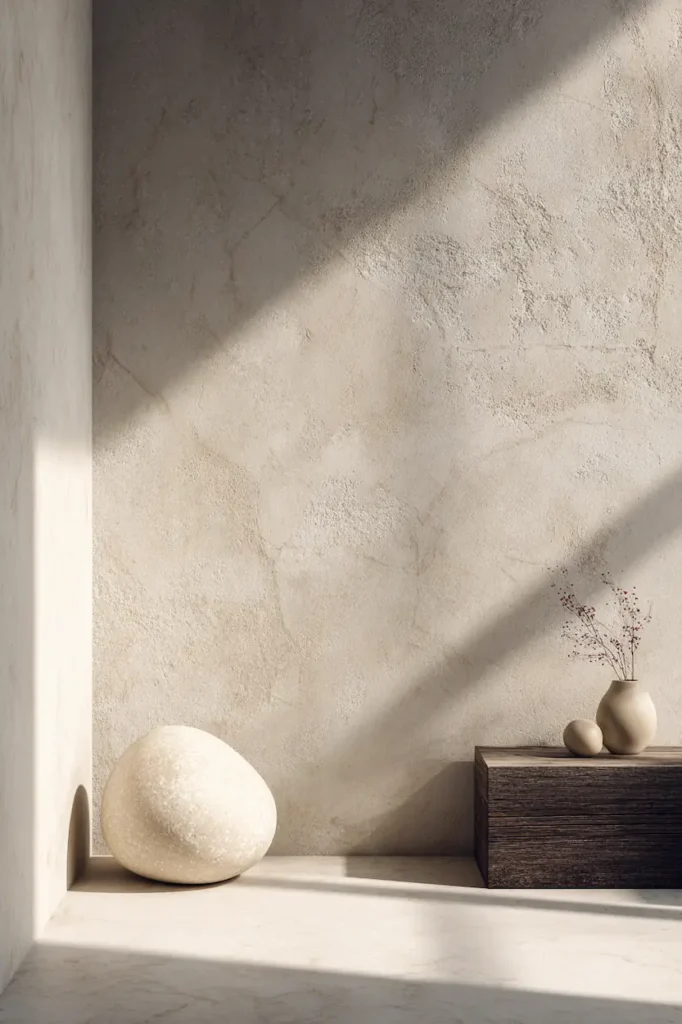
One of the most overlooked elements in blank wall decorating is restraint.
Leaving space untouched is not failure.
It’s intention.
When you allow parts of the wall to remain empty:
- The decorated areas feel more powerful
- The room feels calmer
- The eye knows where to rest
A wall doesn’t need to be fully “used” to be complete.
Sometimes, less truly becomes more.
Let the wall reflect mood, not trends
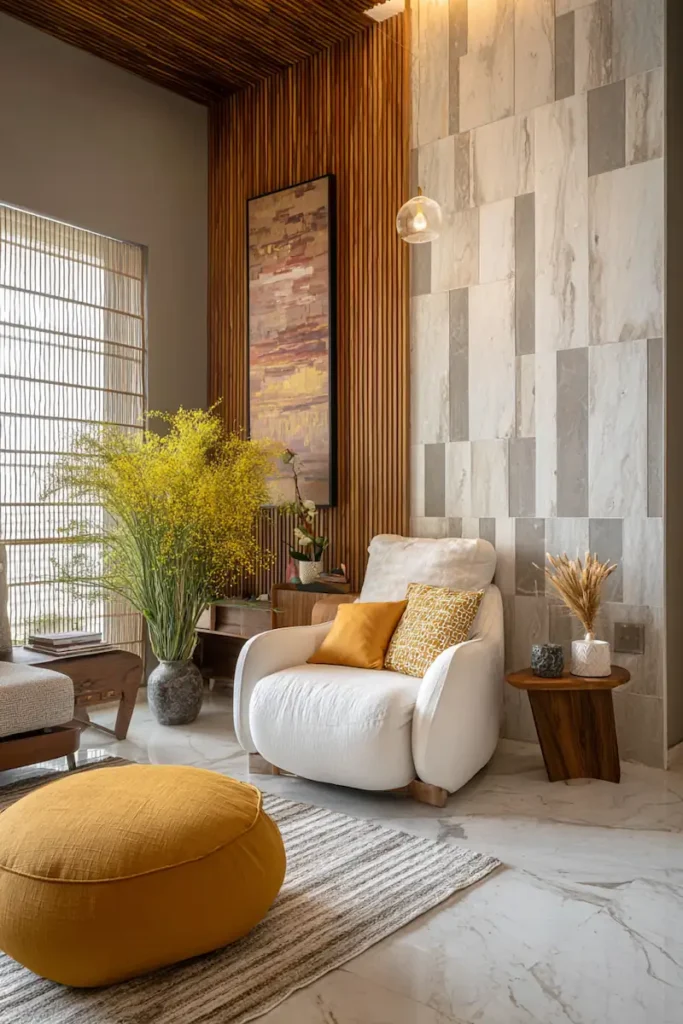
Trends change.
Mood lasts.
Ask yourself:
- Do I want this wall to feel calm or energizing?
- Soft or graphic?
- Emotional or minimal?
When the wall reflects a feeling rather than a trend, it stays relevant.
Your space becomes personal.
And personal spaces always feel right.
FAQ – Inspired questions people ask about blank walls
How do I decorate a blank wall without making it feel cluttered?
Choose one strong element and give it space. Let the wall breathe around it.
Is it okay to leave part of a wall empty?
Absolutely. Empty space gives meaning to what you choose to display.
Can small rooms handle wall decor?
Yes — especially when the decor is intentional, light, and well-scaled.
What if I’m afraid of choosing the wrong piece?
Start with something that feels calm. If it brings ease, it belongs.
A blank wall is an invitation, not a problem
Every blank wall holds potential.
Not to be filled —
but to be understood.
When you approach wall decorating with intention, softness, and restraint, the transformation feels natural. Almost obvious.
And one day, you’ll look at that wall and forget it was ever empty.
That’s when you know it works.
Once you’ve decided how you want to decorate your wall, the next step is choosing artwork that fits the space properly. Understanding proportions makes a huge difference, especially in small or narrow rooms. That’s where a clear wall art size guide becomes essential before making any final decisions.