
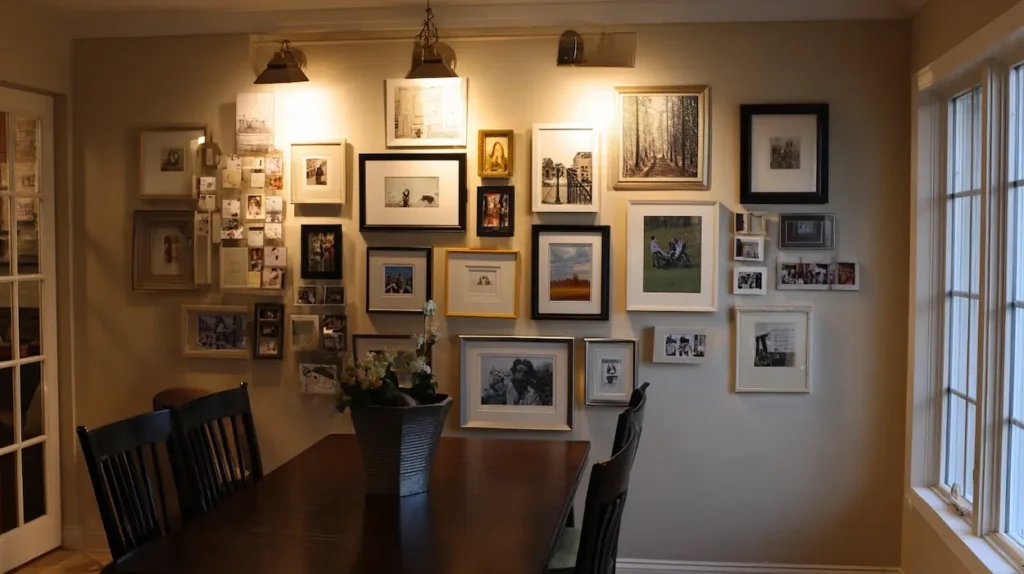
A gallery wall is never just a composition of frames.
It’s a silent conversation between images, memories, and empty space.
When done right, it changes how a room feels.
It slows the eye.
It gives weight to silence.
It makes a wall mean something.
This is not a technical guide.
It’s a visual journey — from the first intention to the final pause you take when you step back and think: yes, this is it.
A gallery wall planner that turns blank space into visual identity
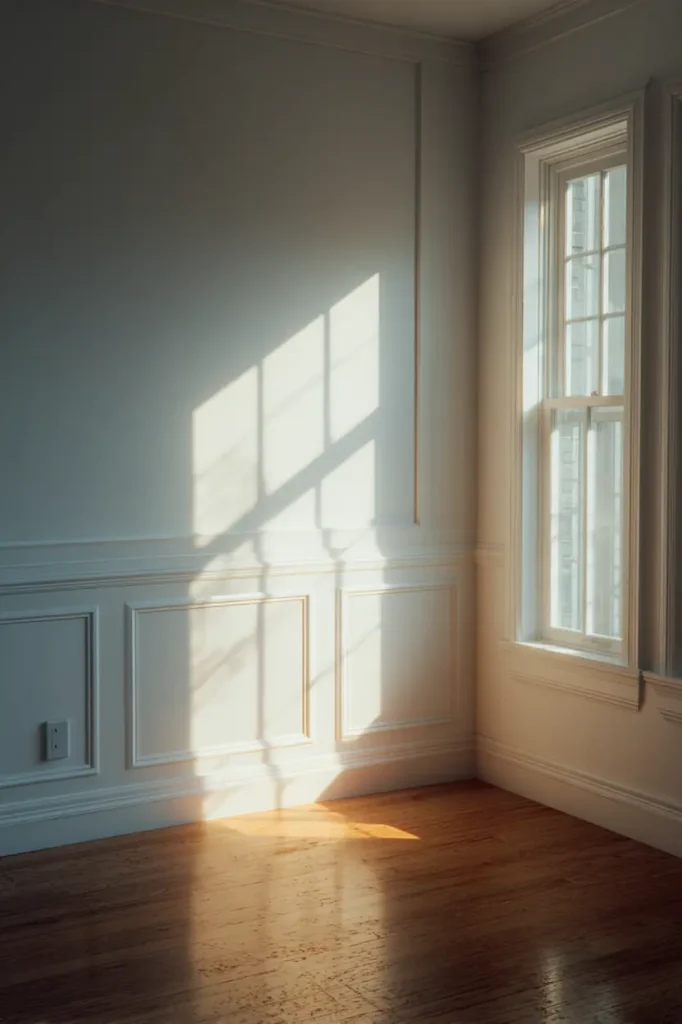
Before frames, before nails, before alignment — there is intention.
A gallery wall begins with a feeling you want the room to hold.
Calm. Contrast. Warmth. Memory. Confidence.
The planner is not a checklist.
It’s a way of listening to the wall.
Some walls want symmetry.
Others want tension.
Some want breathing room.
Others want density, almost like a visual diary.
Stand in front of the empty wall.
Notice the light.
Notice where your eyes naturally rest.
That’s where the story starts.
Planning a gallery wall works best when you start with the wall itself. Large empty walls, awkward corners, or narrow hallways all require slightly different strategies. If you’re still unsure how to approach your space, our guide on blank wall decorating helps you identify the best starting point.
The wall chooses the rhythm long before the art arrives
Not every wall wants to be filled.
And not every wall wants the same tempo.
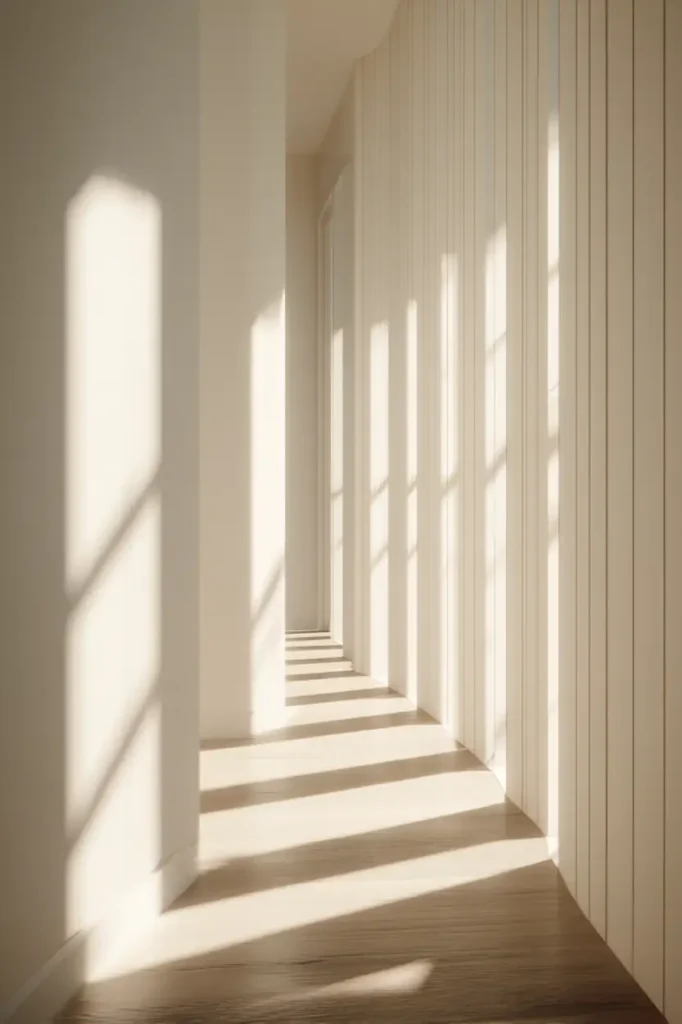
A narrow hallway wall prefers vertical movement — a slow walk, frame by frame.
A living room wall often wants balance — something that anchors the space without shouting.
A stairway wall invites progression, almost like turning pages.
The size of the wall defines the rhythm.
Large walls allow pauses.
Small walls demand precision.
This is where many gallery walls fail — not because of the art, but because the rhythm was ignored.
Let the wall set the pace.
Laying the composition on the floor is where clarity appears
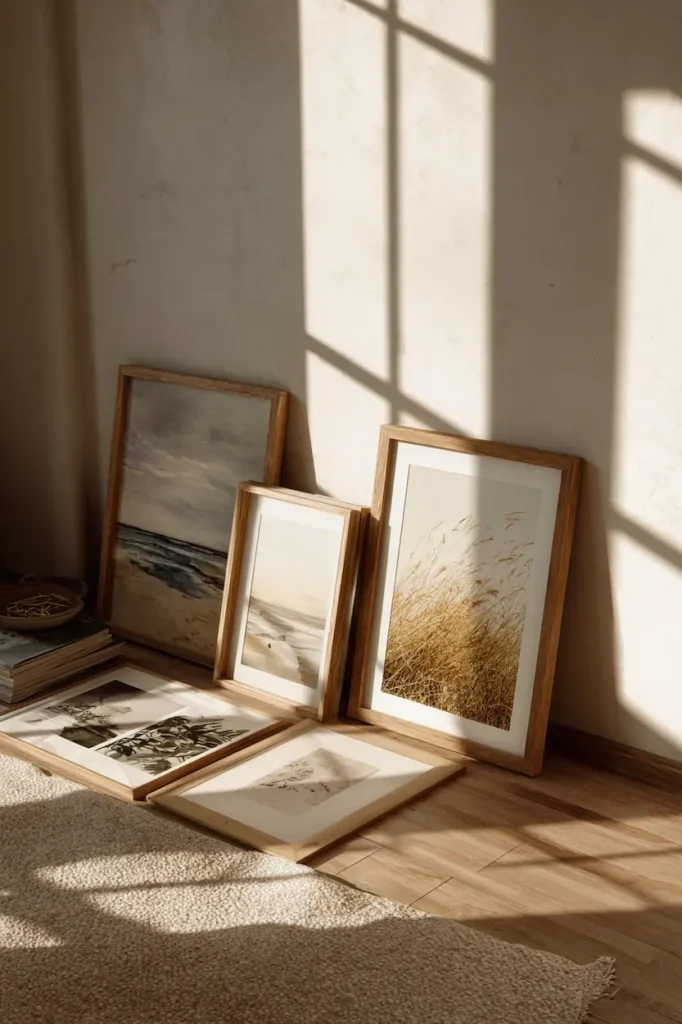
Before anything touches the wall, everything belongs on the floor.
This moment is essential.
It removes pressure.
It invites intuition.
Frames lean, overlap, shift.
Images move closer, then apart.
Negative space reveals itself.
You start seeing relationships:
- which images speak softly
- which ones pull attention
- which ones need distance to breathe
This stage is not about perfection.
It’s about discovering balance.
When the floor composition feels calm — not exciting, not chaotic — you’re close.
Choosing images that speak to each other without matching
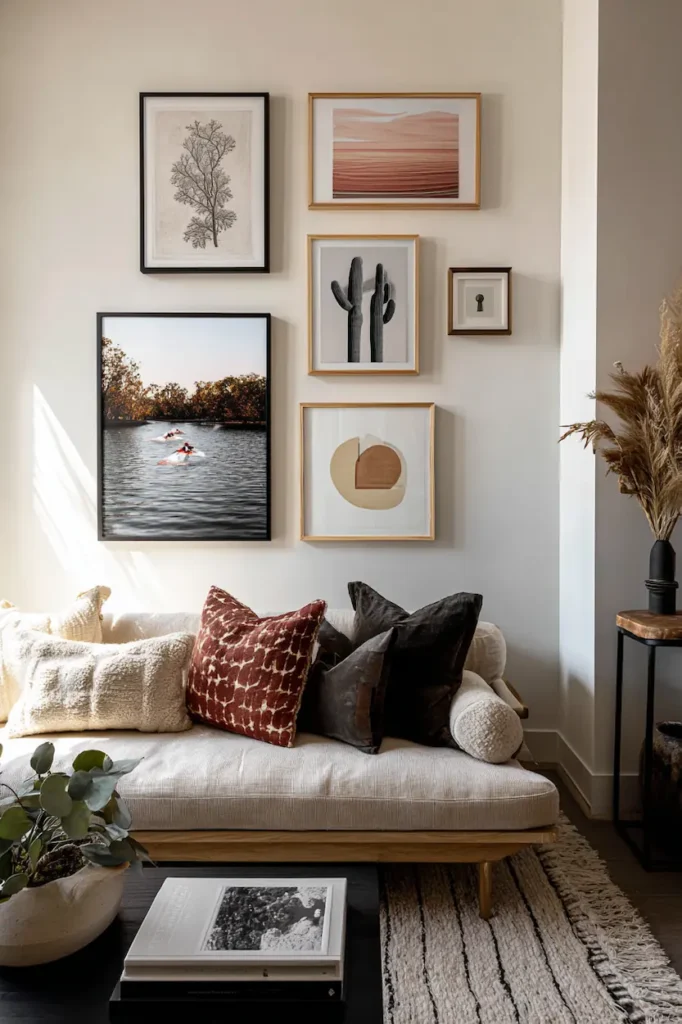
A gallery wall is not about uniformity.
It’s about dialogue.
Photographs can sit next to abstract art.
Typography can soften a painting.
A childhood memory can coexist with something purely aesthetic.
What matters is not style — but tone.
Ask yourself:
- Do these images feel like they belong in the same emotional world?
- Would they make sense in the same conversation?
Color can guide you.
So can texture.
Or subject.
But the strongest gallery walls are unified by feeling, not by theme.
Frames are not decoration, they are punctuation
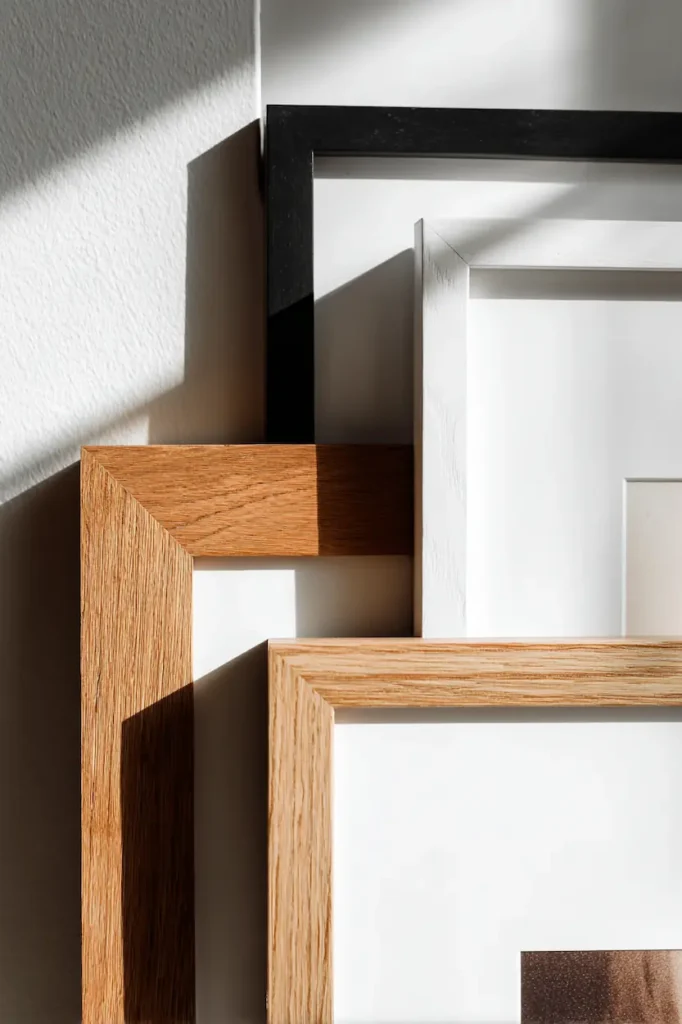
Frames decide how loudly each image speaks.
Thin frames whisper.
Thick frames anchor.
Wood warms.
Black sharpens.
White disappears.
Mixing frames is not a mistake — it’s often what gives life to the wall.
But there should be intention behind every contrast.
Too many identical frames can flatten the story.
Too many different ones can distract.
Think of frames as pauses, commas, and full stops.
They don’t compete with the images.
They guide the reading.
Color harmony keeps the wall calm even when the art is bold
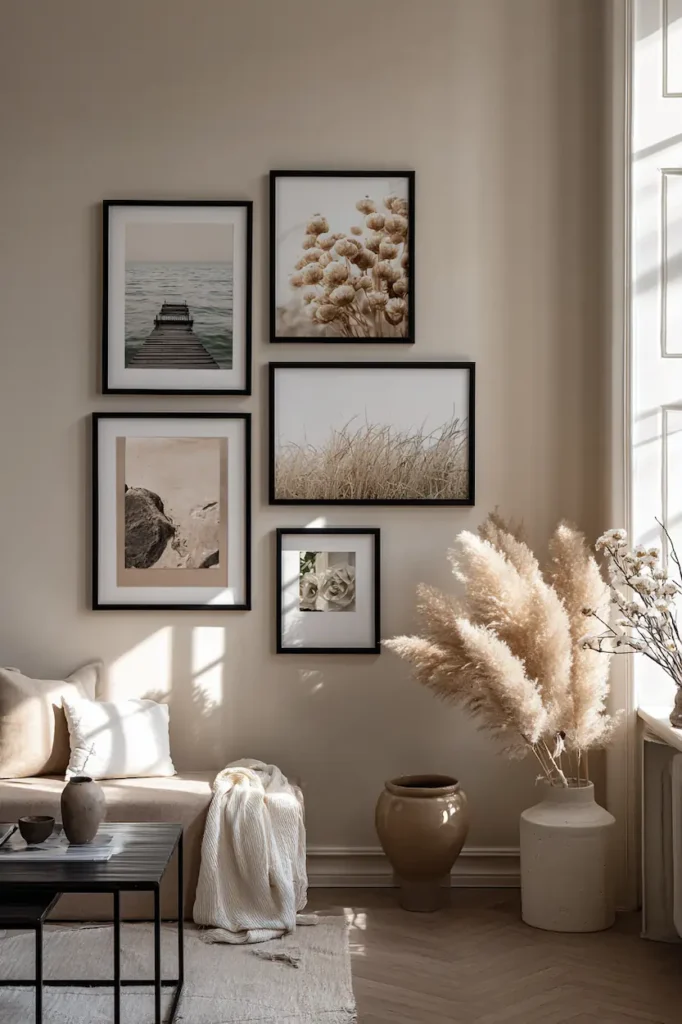
A gallery wall can be expressive without being loud.
When colors echo each other — even subtly — the wall feels grounded.
This doesn’t mean everything must match.
It means repetition:
- a recurring beige
- a shared shadow tone
- a consistent warmth or coolness
Black-and-white pieces often act as anchors.
They give rest to the eye.
They allow bolder pieces to exist without tension.
If the room already has strong colors, the gallery wall can soften them.
If the room is neutral, the wall can introduce depth.
Balance is always the goal.
Hanging the wall is an act of trust, not correction
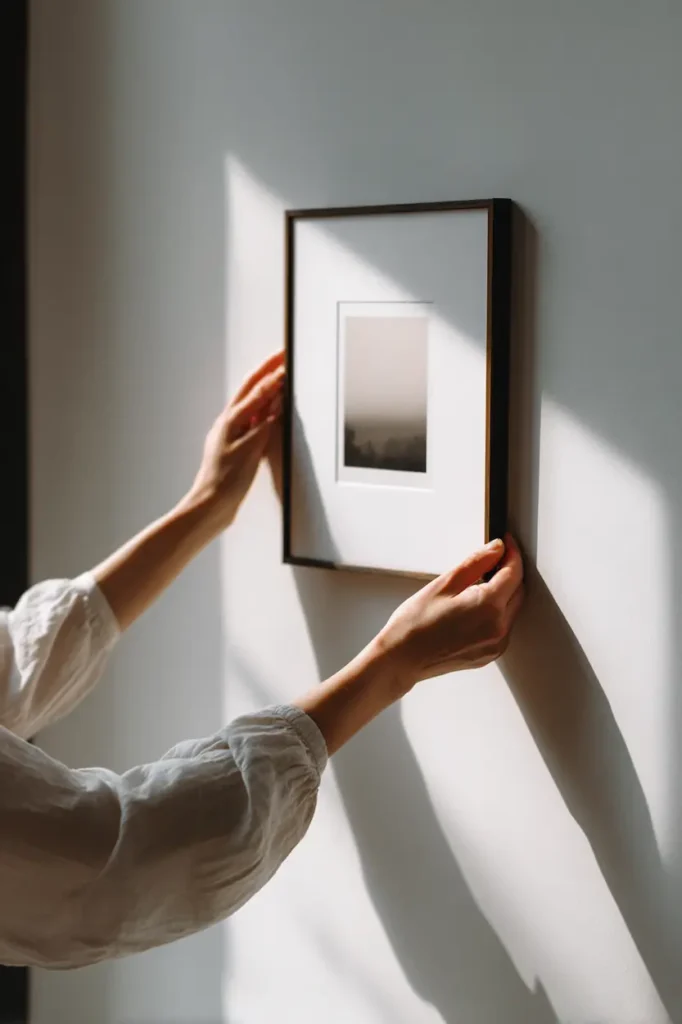
This is the moment where hesitation appears.
Where centimeters feel dramatic.
Where alignment suddenly matters too much.
Breathe.
If the composition worked on the floor, it will work on the wall.
Start from the center — or from the most emotionally important piece.
Everything else finds its place around it.
Small imperfections are not flaws.
They are proof that a human hand made the choice.
A gallery wall that feels too perfect often feels distant.
Let it live.
Stepping back is part of the process, not the end
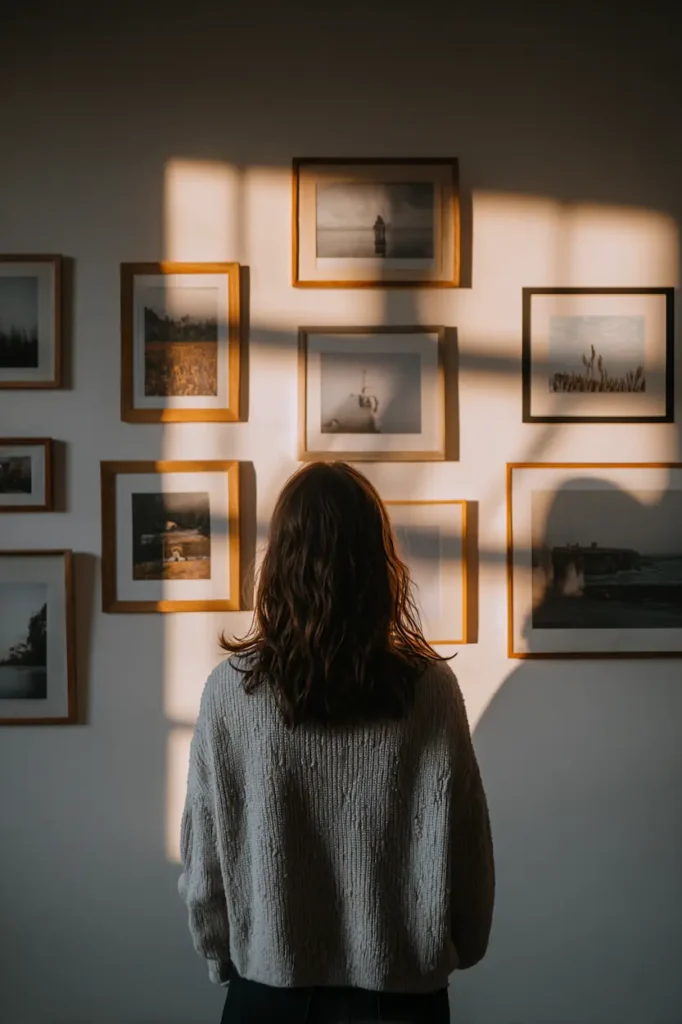
Once everything is hung, don’t rush.
Sit.
Walk past the wall.
See it at different times of day.
Morning light may soften it.
Evening shadows may reshape it.
A good gallery wall reveals itself slowly.
It doesn’t demand attention — it earns it.
And sometimes, the final touch is subtraction.
Removing one frame can bring the entire wall into focus.
When the wall finally belongs to the room
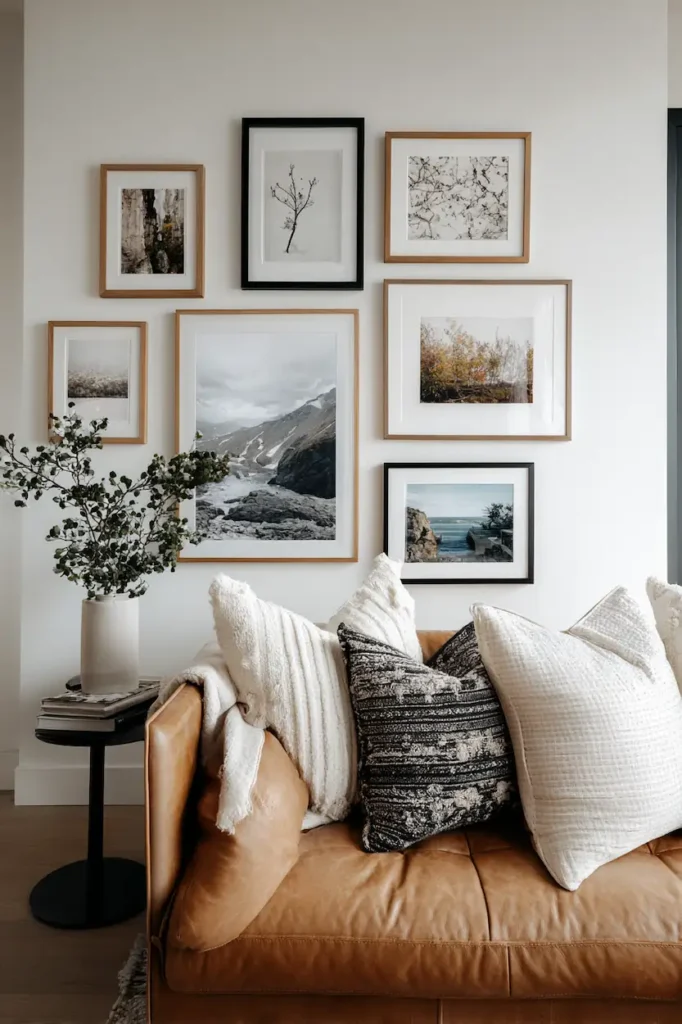
You’ll know the gallery wall is finished when it stops feeling new.
When it feels like it’s always been there.
Like the room needed it to make sense.
Guests will look at it without knowing why.
You’ll glance at it without thinking.
That’s the moment.
Not because it’s impressive — but because it’s aligned.
FAQ — Gallery wall, in real life
Does a gallery wall have to be symmetrical?
No. Some of the most engaging walls are slightly irregular. Balance matters more than symmetry.
Can I start small and add over time?
Yes. Many gallery walls grow naturally. Leaving space for future pieces keeps it alive.
Is it better to mix art and personal photos?
Often yes. The mix creates depth and prevents the wall from feeling like a showroom.
What if I change my mind later?
That’s part of the beauty. A gallery wall is allowed to evolve with you.
Conclusion — Seeing your wall differently
A gallery wall is not a destination.
It’s a reflection.
Of what you notice.
Of what you keep.
Of what you choose to look at every day.
Once you’ve created one, you’ll never see an empty wall the same way again.
You’ll start imagining stories where there was only space.
And that idea — that a wall can hold meaning —
is always worth saving.