
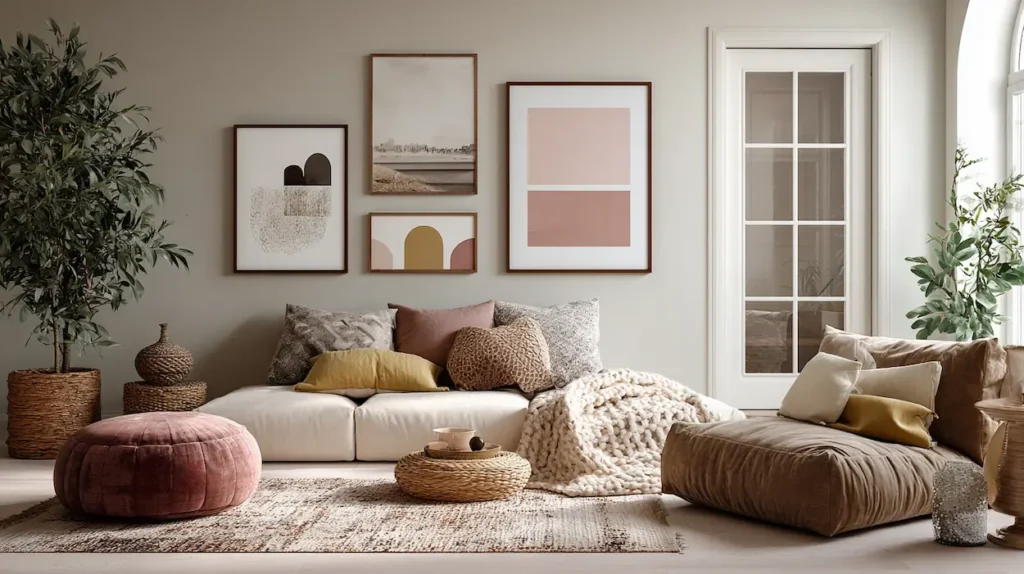
You’re not really searching for poster sizes.
You’re searching for balance.
Because a poster that’s too small feels lost.
Too big, and the wall feels crowded.
But when the size is right, the room suddenly makes sense.
This guide gives you a clear visual direction — not rules, not theory.
Just the best poster sizes for frames, how they read on a wall, and why certain proportions always feel right.
Scroll to see how scale quietly changes the energy of a space.
Best poster sizes for frames create instant visual balance
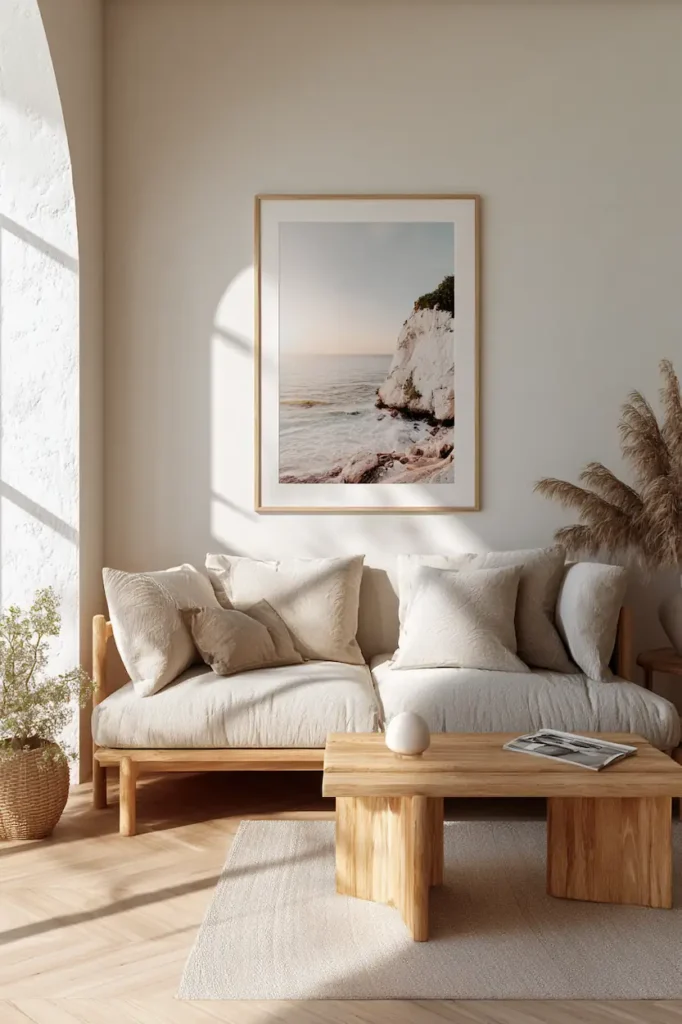
The right poster size doesn’t decorate a wall.
It anchors it.
Certain dimensions feel natural to the eye because they echo furniture widths, wall heights, and human proportions. When framed correctly, they create calm instead of visual noise.
Here’s the quick reference chart designers default to when choosing poster sizes for frames:
Quick Chart — Most Used Poster Sizes & Where They Work Best
| Poster Size | Best Used For | Visual Effect |
|---|---|---|
| 8×10 in | Shelves, desks, small walls | Subtle, intimate |
| 11×14 in | Gallery walls, accents | Light structure |
| 12×16 in | Small feature walls | Balanced, modern |
| 16×20 in | Standalone pieces | Confident presence |
| 18×24 in | Living rooms, bedrooms | Strong focal point |
| 24×36 in | Statement walls | Architectural impact |
This quick chart gives you instant clarity.
But if you want to see how wall art size really behaves in real spaces, the full Wall Art Size Guide (Choose the Right Size) puts everything into perspective.
This isn’t about filling space.
It’s about choosing a size that feels inevitable on that wall.
Small poster sizes bring intimacy to overlooked spaces
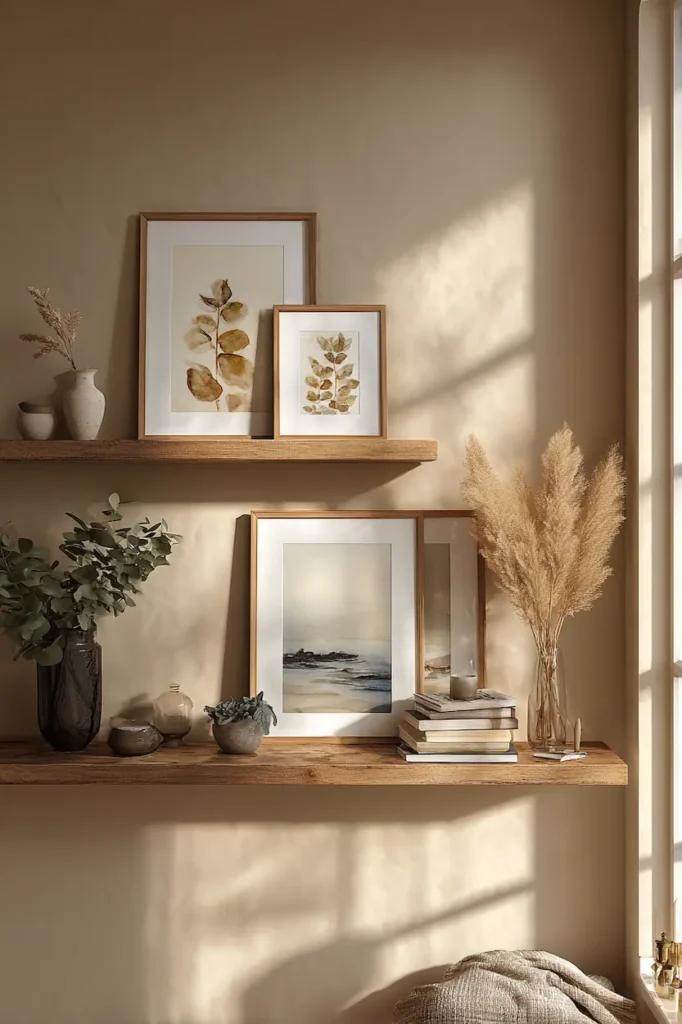
Smaller formats don’t compete for attention — they invite it.
An 8×10 or 11×14 framed poster works best where the viewer is close:
hallways, bedside tables, reading corners, layered shelves.
These sizes feel intentional because they don’t try to dominate. They whisper instead of shouting.
They work especially well when:
- Paired with thicker mats
- Grouped in odd numbers
- Positioned slightly off-center
The wall feels styled, not filled.
Medium poster sizes stabilize everyday walls
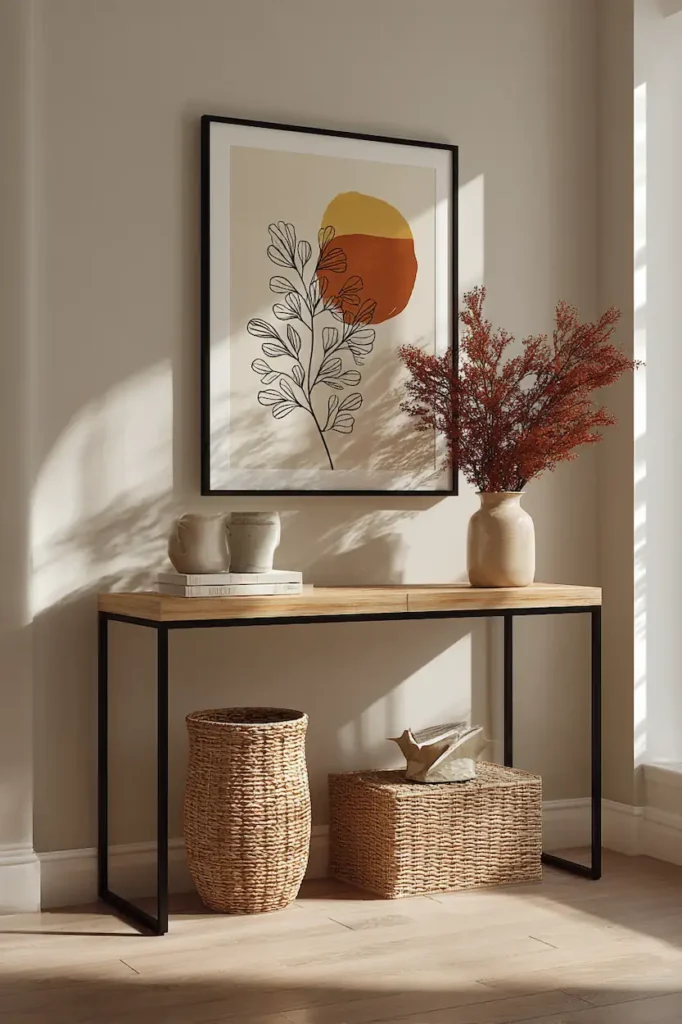
This is where most rooms find their rhythm.
12×16 and 16×20 are the quiet heroes of wall décor. Large enough to stand alone, small enough to stay flexible.
They’re perfect above:
- Sideboards
- Consoles
- Nightstands
- Compact sofas
Visually, these sizes:
- Align naturally with furniture width
- Feel balanced even with minimal framing
- Don’t overwhelm neutral interiors
If a wall feels empty but a large poster feels “too much,” this is usually the sweet spot.
Large poster sizes define the room’s visual identity
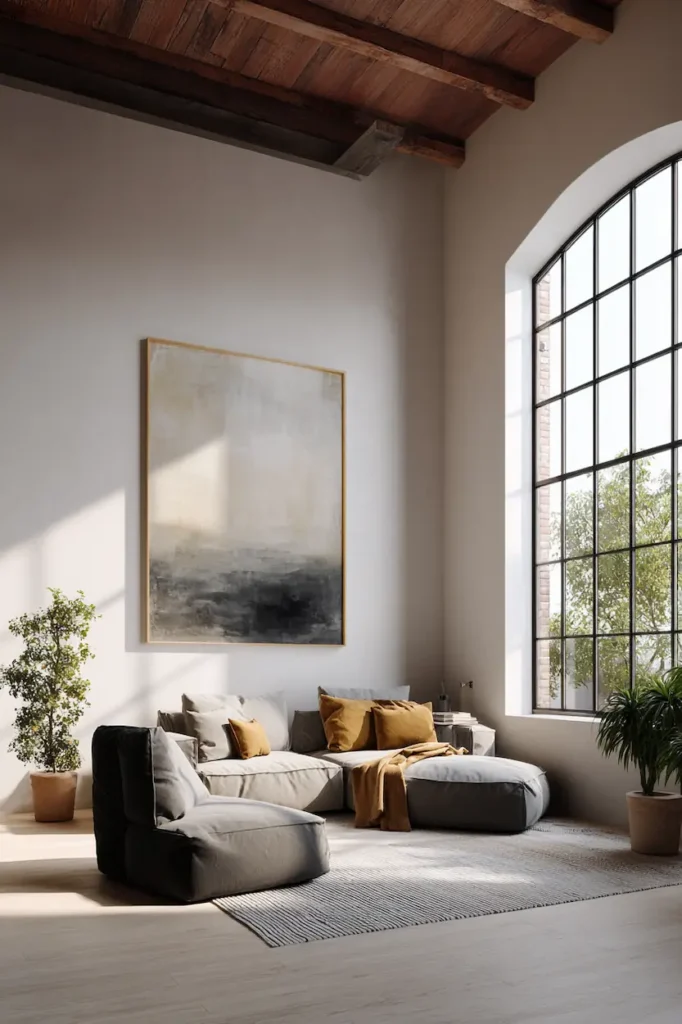
When you choose 18×24 or 24×36, you’re no longer decorating.
You’re declaring intention.
Large framed posters work because they:
- Create a clear focal point
- Slow down the eye
- Make a room feel finished
These sizes belong where the wall is uninterrupted and the furniture is grounded — living rooms, master bedrooms, dining spaces.
A single large poster often feels calmer than three small ones.
Less fragmentation. More presence.
Frame proportions matter as much as poster size
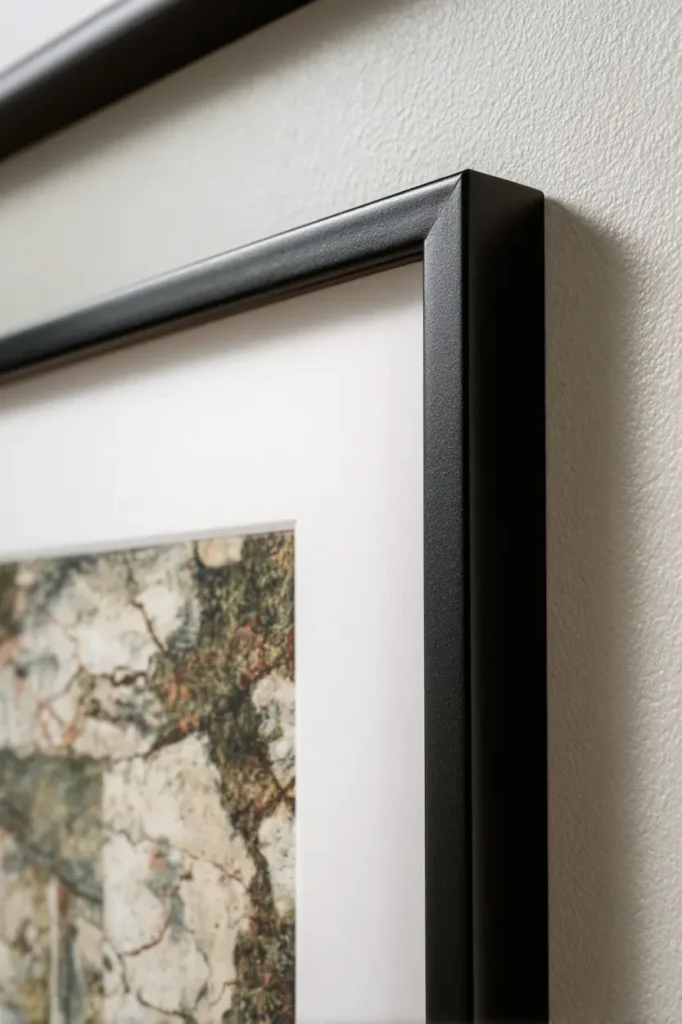
A poster never lives alone.
The frame changes how large — or small — it feels.
A simple rule designers follow instinctively:
- Small posters → thicker mats, lighter frames
- Large posters → thinner mats, stronger frames
White space inside the frame gives the artwork room to breathe.
Without it, even the right poster size can feel cramped.
Practical Design Tips
What actually works (and why)
1. Measure the furniture first
The poster (or framed set) should be about ⅔ the width of what’s below it. This creates instant harmony.
2. Don’t size based on the wall — size based on distance
If you see it from across the room, go bigger.
If you see it up close, smaller feels intentional.
3. One large poster > many small ones (most of the time)
Large formats reduce visual noise and create calm.
4. Common mistakes to avoid
- Hanging small posters too high
- Using tiny frames on wide walls
- Centering everything by default
Walls feel better when things are optically balanced, not mathematically centered.
FAQ
What is the most popular poster size for frames?
16×20 and 18×24 are the most versatile and widely used.
Should posters touch furniture visually?
They should relate, not touch. Leave breathing room — usually 6–10 inches above furniture.
Is bigger always better for wall art?
No. Bigger is calmer only when the wall can support it.
Can I mix poster sizes on one wall?
Yes — as long as one size clearly leads and the others support it.
Conclusion
Choosing the best poster sizes for frames isn’t about trends.
It’s about how a wall feels when you stop thinking about it.
When the size is right, the room relaxes.
The wall settles.
And the art finally feels like it belongs there.
That’s the kind of reference worth saving.