
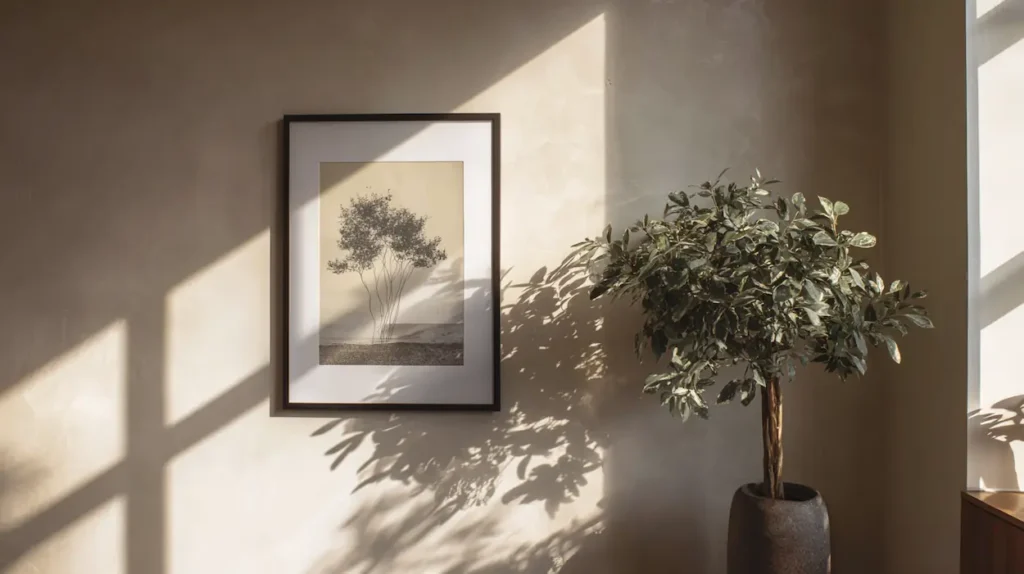
There is something quietly powerful about wall art printed at home.
No showroom lighting.
No perfect staging.
Just paper, ink, a wall… and intention.
When done simply, home-printed wall art doesn’t feel DIY.
It feels personal.
Almost intimate.
It carries the weight of a choice made slowly.
An image selected for a reason.
A wall that didn’t want to shout — only to exist with presence.
This is not about filling space.
It’s about letting a wall breathe.
Printing wall art at home transforms a blank wall into a quiet statement
A blank wall is never really empty.
It’s waiting.
When you print art at home, the act itself becomes part of the story.
You slow down.
You select carefully.
You notice proportions, margins, white space.
The result is rarely loud.
And that’s exactly why it works.
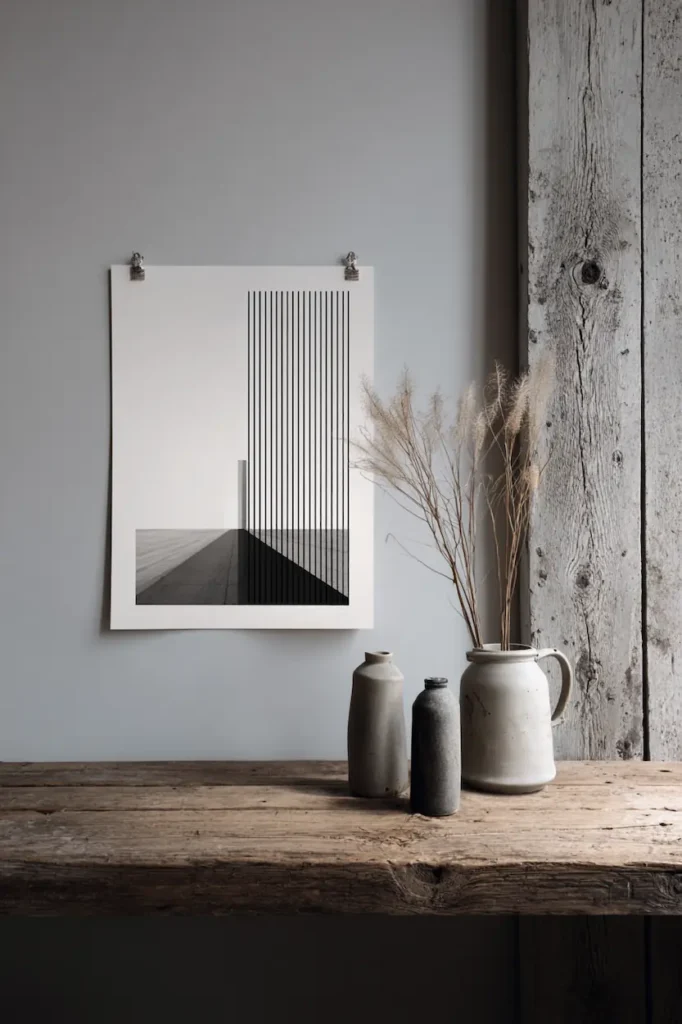
Simple prints — black and white photography, soft abstract forms, delicate typography — create a pause in the room.
They don’t compete with furniture.
They don’t dominate color palettes.
They anchor the space.
Home-printed wall art feels lighter than framed gallery pieces.
Less formal.
More human.
It whispers instead of explaining.
Simple prints feel calmer because they leave room for the space itself
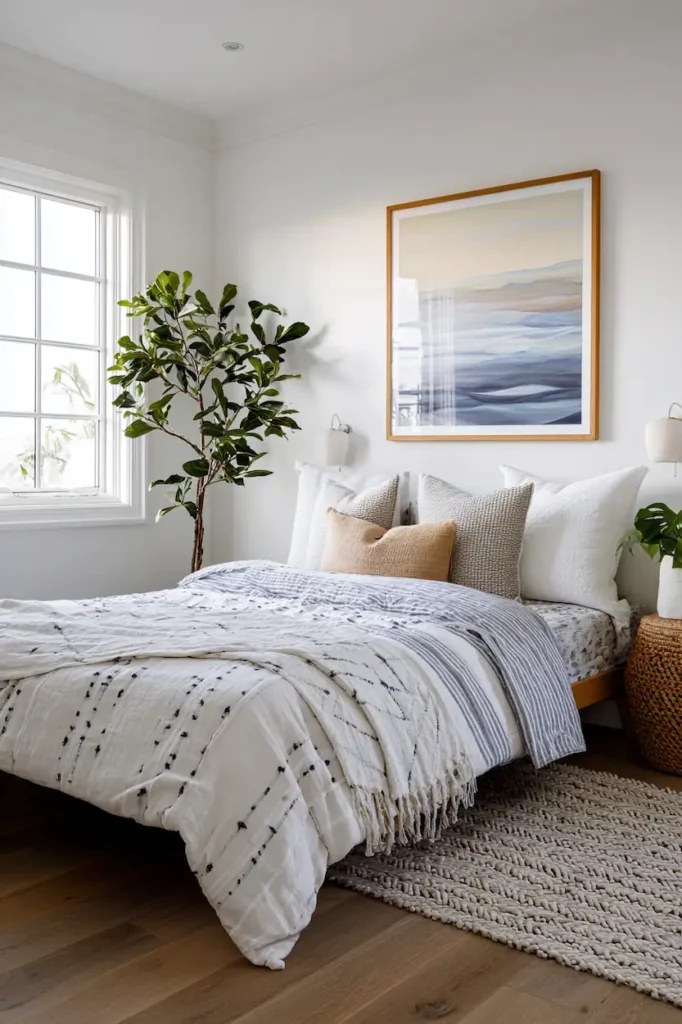
Clean wall art doesn’t try to finish the room.
It lets the room finish itself.
A single line drawing.
A muted landscape.
A minimal quote with generous margins.
These pieces allow air around them.
They respect the wall as much as the image.
When printing at home, restraint becomes your strongest tool:
- limited colors
- soft contrasts
- matte textures
- visible paper grain
Imperfection becomes character.
A slightly uneven edge.
A paper that isn’t museum-perfect.
This honesty is what makes the wall feel lived in — not staged.
The beauty of home printing lies in scale, not complexity
One of the most overlooked advantages of printing wall art at home is scale.
You are not limited by predefined sizes.
You can:
- print small and intimate
- go unexpectedly large
- play with generous white borders
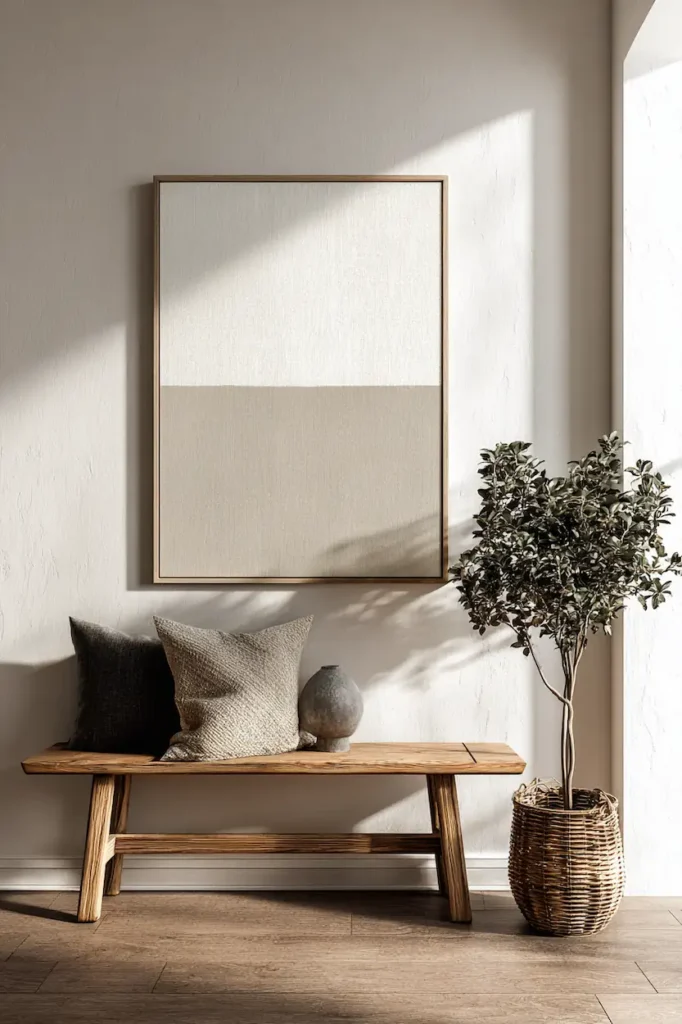
A simple A3 print, centered on a wide wall, can feel more intentional than a complex gallery wall.
Scale gives silence weight.
A large, calm image with minimal detail creates emotional depth without visual noise.
It’s not about adding more.
It’s about choosing enough.
Clean wall art starts with choosing the right kind of image
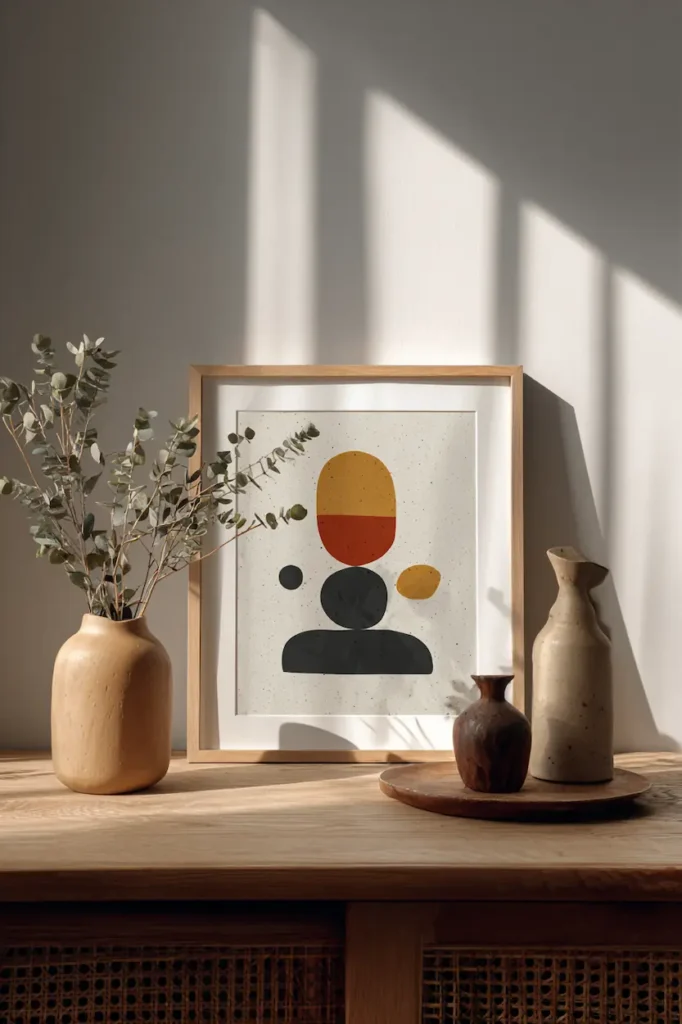
Not every image wants to live on a wall.
The most successful home-printed wall art usually shares one thing:
visual restraint.
Images that work beautifully:
- black & white photography with soft contrast
- abstract shapes with breathing space
- nature details cropped tightly
- minimal typographic compositions
- single-subject illustrations
Avoid images that rely on sharp details or heavy saturation.
They often lose their strength when printed simply.
Think in terms of mood, not subject.
Ask yourself:
How do I want this wall to feel at night?
Calm.
Grounded.
Quietly present.
That answer will guide the image better than any trend.
Paper choice quietly defines the emotion of the wall
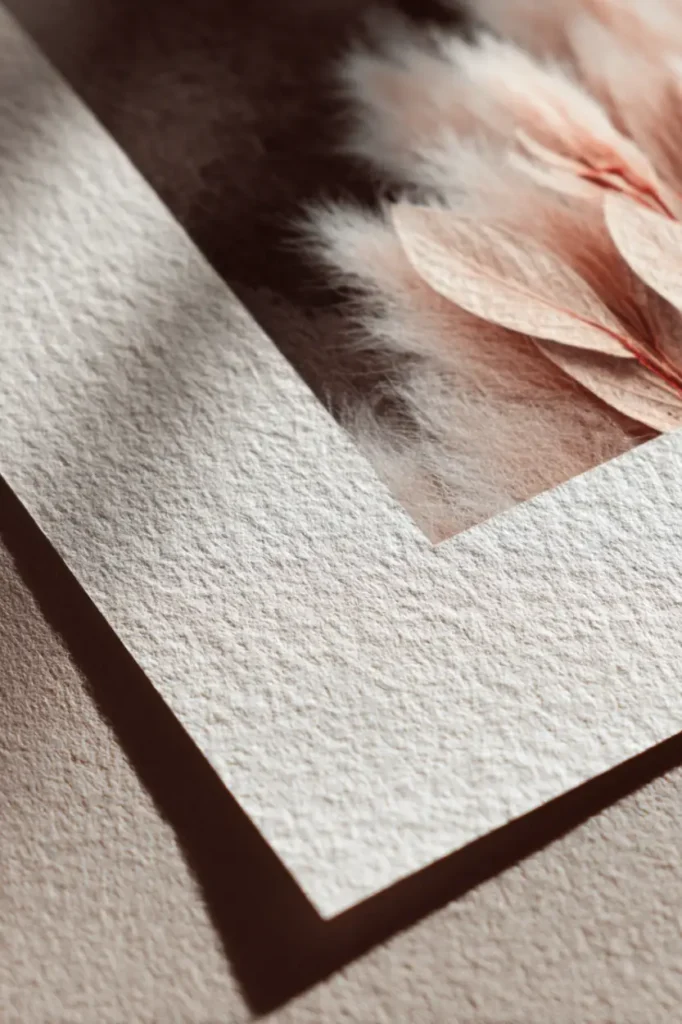
Paper is not a technical decision.
It’s emotional.
Matte paper absorbs light and softens the image.
It feels calm, tactile, almost fragile.
Slightly textured paper adds depth without decoration.
It catches light differently throughout the day.
Thin paper feels light and poetic.
Heavier paper feels intentional and grounded.
When printing wall art at home, paper becomes part of the artwork — not just its support.
The wall doesn’t see ink first.
It sees texture.
Minimal framing (or none at all) keeps the wall honest
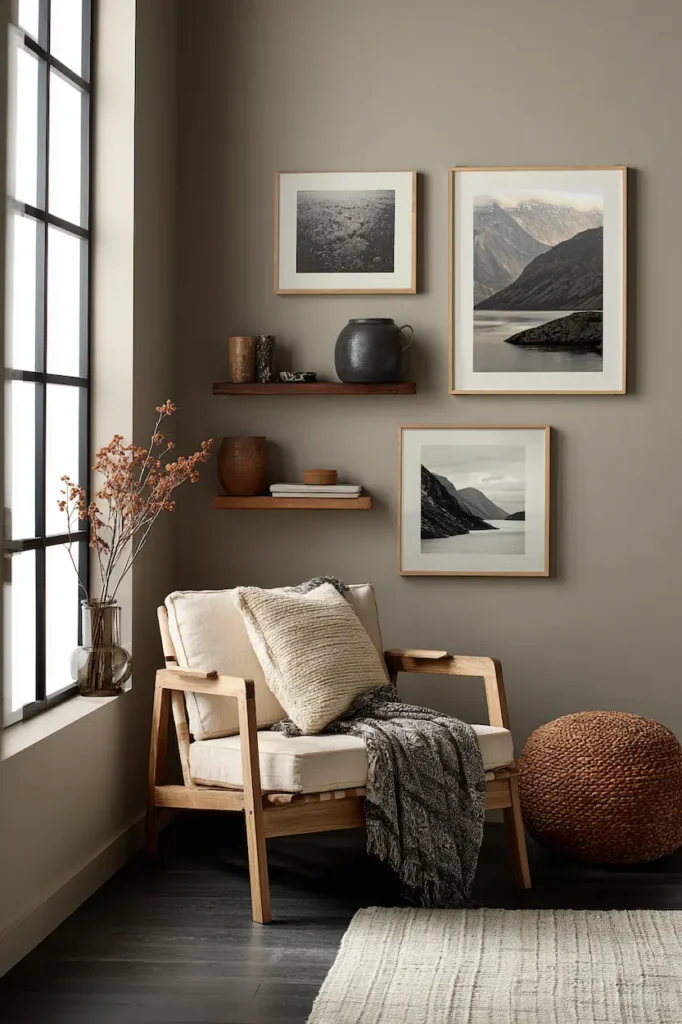
Frames can elevate.
They can also overdefine.
For simple, clean wall art, restraint works best:
- thin wooden frames
- soft neutral tones
- no heavy borders
- or even no frame at all
Taped prints, clip rails, or ledges allow flexibility.
They make the art feel temporary — and therefore alive.
A wall that can change doesn’t feel unfinished.
It feels adaptable.
Home-printed wall art shines when it doesn’t pretend to be permanent.
Where simple printed wall art feels most powerful
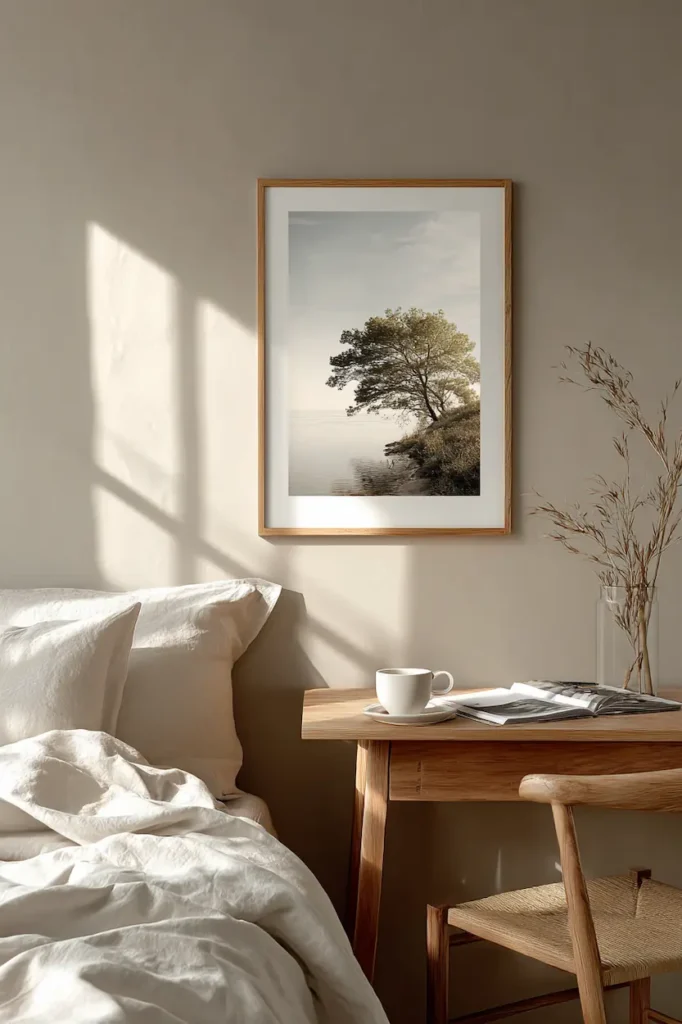
Some spaces ask for quiet more than others.
Printed wall art at home works beautifully in:
- bedrooms, where calm matters
- hallways, where subtle rhythm guides movement
- reading corners, where silence supports focus
- home offices, where visual clarity improves mental clarity
In these spaces, the wall doesn’t need decoration.
It needs balance.
One print.
Placed thoughtfully.
At eye level.
With space around it.
That’s often enough to shift the energy of the room.
Printing at home creates a deeper connection to the wall
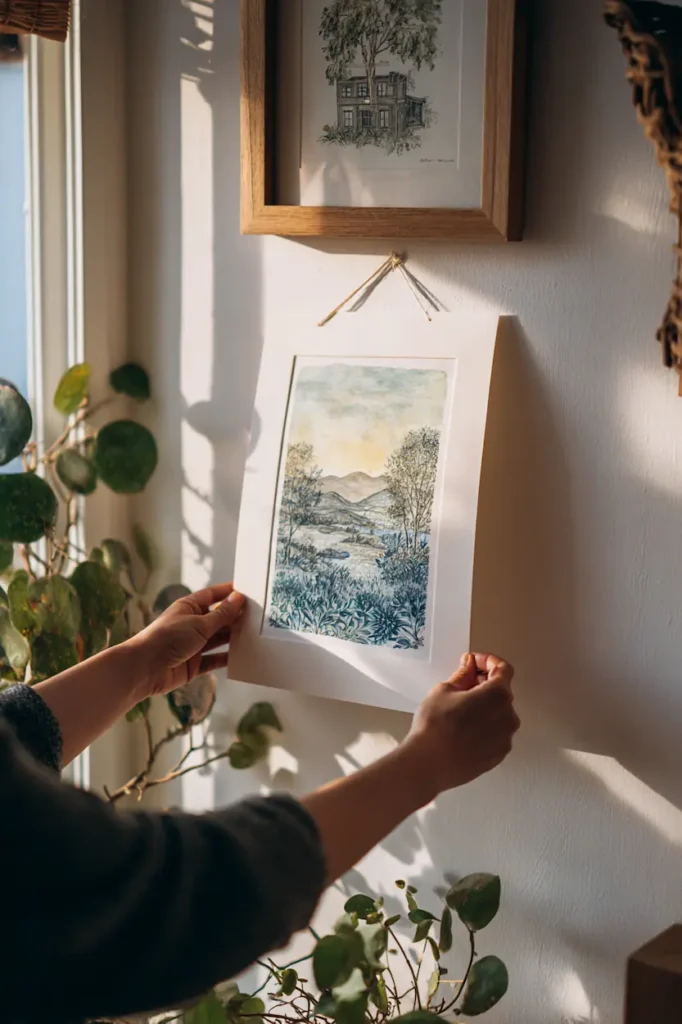
There’s a difference between choosing art and making the choice real.
Printing at home turns intention into action.
You see the image emerge.
You feel the paper.
You place it yourself.
That process builds attachment.
The wall no longer displays an object.
It holds a decision.
This is why home-printed wall art often stays longer than expected.
It carries memory, not just aesthetics.
Clean wall art is less about trends and more about trust
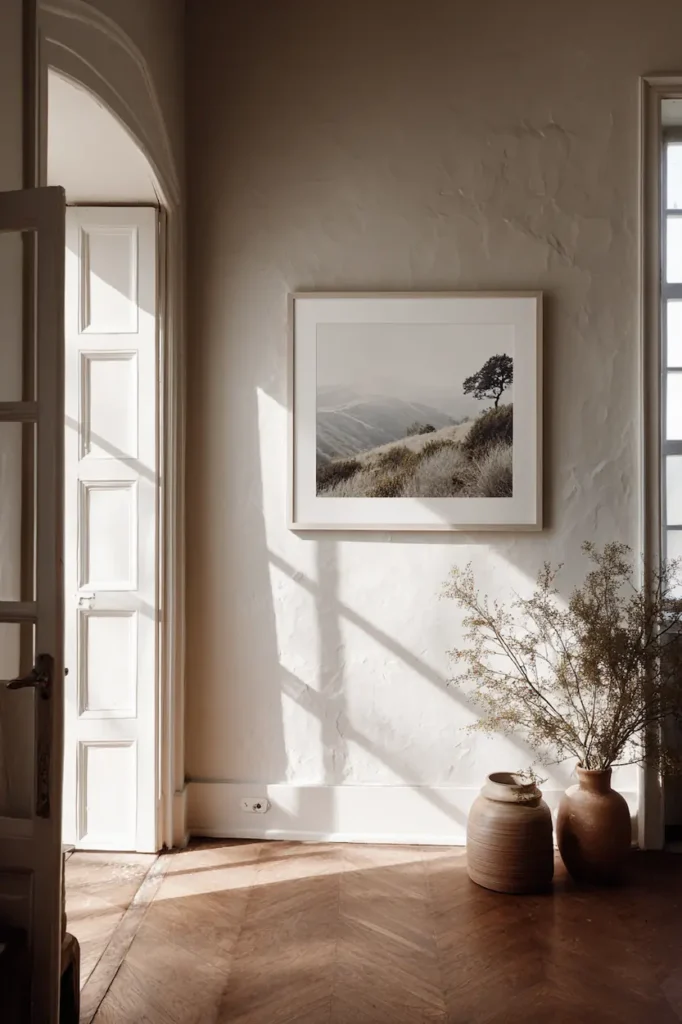
Trends change quickly.
Walls don’t.
When you print wall art at home, you are less tempted by what’s popular and more guided by what feels right.
Trust your instinct.
If an image feels calm to you, it will likely calm the room.
Simplicity isn’t emptiness.
It’s clarity.
And clarity is timeless.
FAQ — simple questions people really ask
Can home-printed wall art look refined?
Yes. Simplicity, paper choice, and spacing often matter more than professional printing.
Is black and white better than color?
Not always, but it’s more forgiving and naturally calming in most interiors.
Do I need frames for a clean look?
No. Sometimes unframed prints feel lighter and more intentional.
How many prints should go on one wall?
Often fewer than you think. One well-placed print can be enough.
A wall doesn’t need more — it needs intention
Printing wall art at home is not about doing it yourself.
It’s about choosing yourself.
Choosing calm over clutter.
Space over saturation.
Emotion over perfection.
The next time you look at a blank wall, don’t ask what it needs.
Ask what you want to feel when you pass it every day.
That answer is already the artwork.
And once you see it, you’ll want to save that feeling —
just like a pin you keep coming back to.
After printing and framing your artwork, the final step is bringing it to the wall. Clean prints deserve clean placement, and small mistakes can ruin the overall look. Following basic hanging wall art guidelines ensures your DIY prints look polished and professional.