
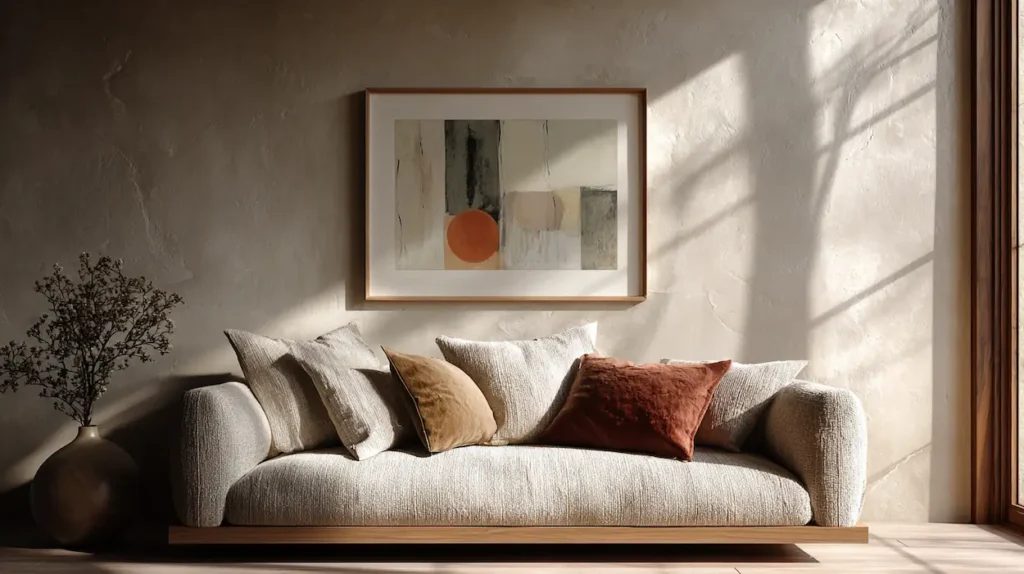
Wall Art Size Guide — choosing the right size is not about rules or measurements.
It’s about how a wall feels once the artwork is in place.
The right scale brings balance, calm, and visual confidence to a space, while the wrong size leaves a wall unfinished or overwhelming.
This guide helps you understand how wall art size shapes the mood of a room and why proportion matters more than decoration.
Choosing the right size for wall art often depends on how the artwork will be displayed. Single statement pieces, symmetrical layouts, or full gallery walls all follow different sizing rules. If you’re planning a multi-frame setup, a detailed gallery wall planner can help you visualize the final result.
This wall art size choice transforms a space instantly
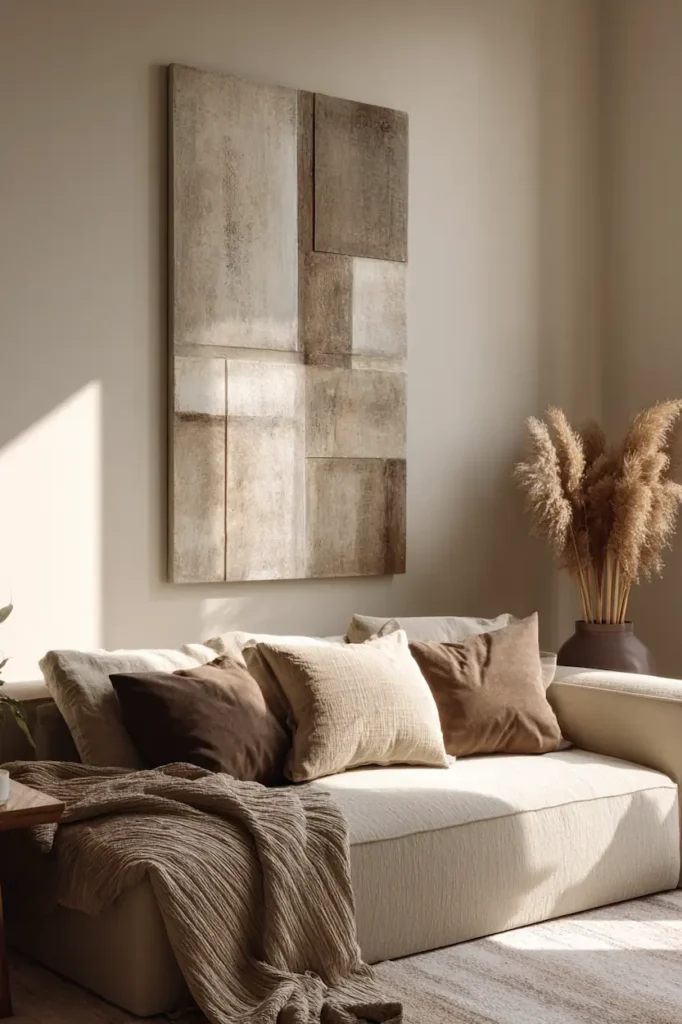
Choosing wall art size is not a technical task.
It’s a visual decision.
An emotional one.
Size determines whether a wall feels intentional…
or unfinished.
Too small, and the artwork fades into the background.
Too large, and the room loses its sense of calm.
The right size doesn’t simply decorate a wall.
It anchors it.
It gives the space presence, balance, and quiet confidence.
This guide is not about numbers.
It’s about how a wall feels when you look at it.
When wall art feels too small, the wall stays silent
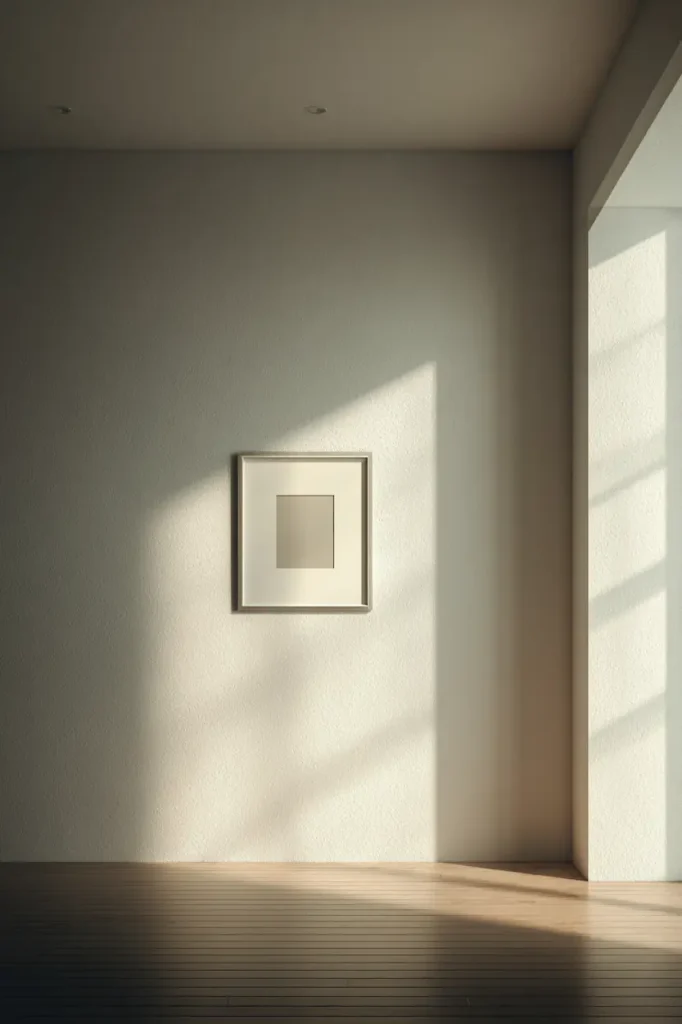
A very common mistake is choosing art that feels “safe.”
Something modest.
Something discreet.
But walls don’t respond to hesitation.
Small art on a large wall creates visual emptiness.
Your eye looks… and keeps moving.
You’ll notice it when:
- The artwork feels disconnected from the furniture
- The wall still looks bare
- The art feels temporary, not intentional
Wall art should hold the space.
Not disappear into it.
Large wall art gives the room visual direction
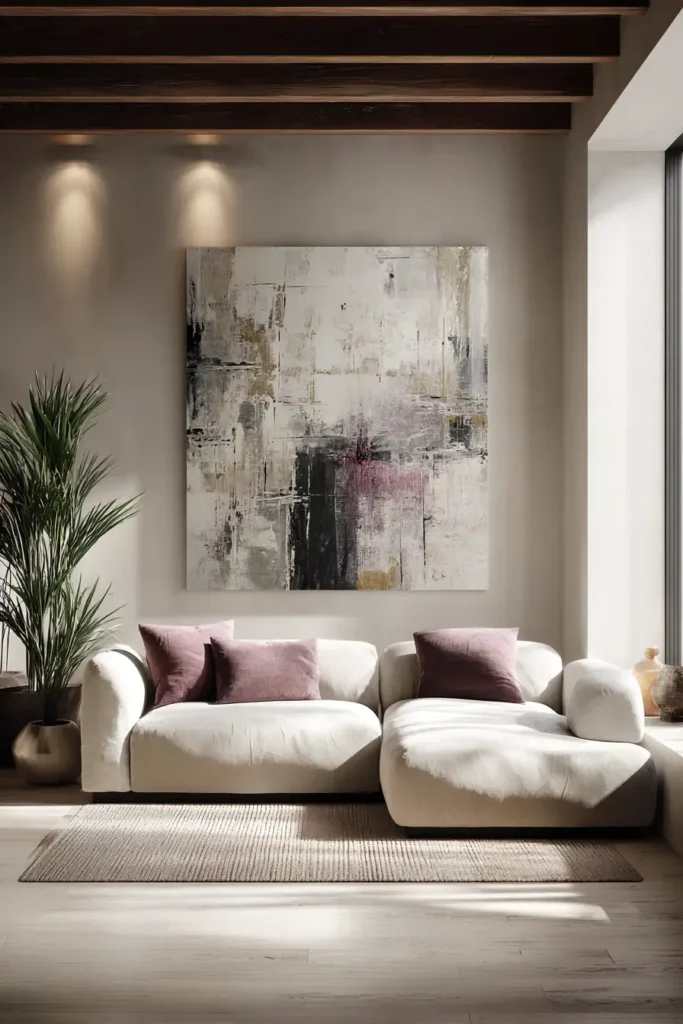
Large-scale wall art makes a clear decision for the room.
It tells the eye where to land.
And suddenly, the space feels composed.
Oversized pieces:
- Ground large or empty walls
- Create calm through clarity
- Reduce the need for multiple small decorations
One strong artwork often feels more peaceful
than many smaller ones competing for attention.
Above a sofa, proportion creates harmony
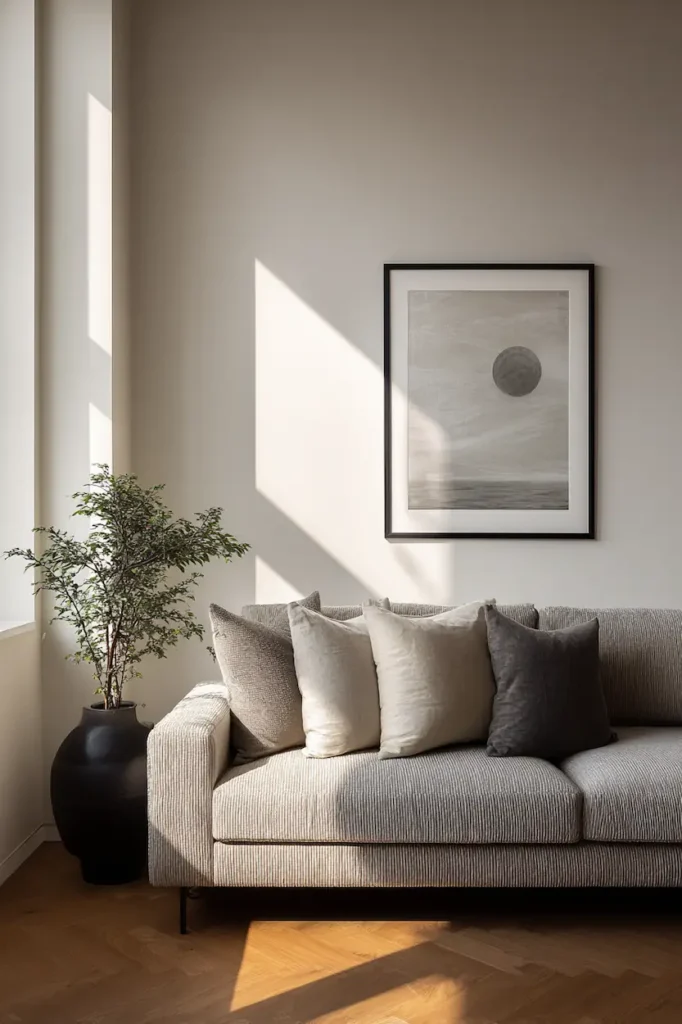
Above a sofa, scale becomes especially important.
A simple visual guideline:
wall art should cover roughly two-thirds of the sofa’s width.
Not exactly.
Not mathematically.
Just enough for the sofa and artwork to feel connected.
Too narrow, and the wall feels fragmented.
Too wide, and the furniture feels overwhelmed.
When the proportion is right,
the entire room feels calmer.
In bedrooms, size shapes the atmosphere
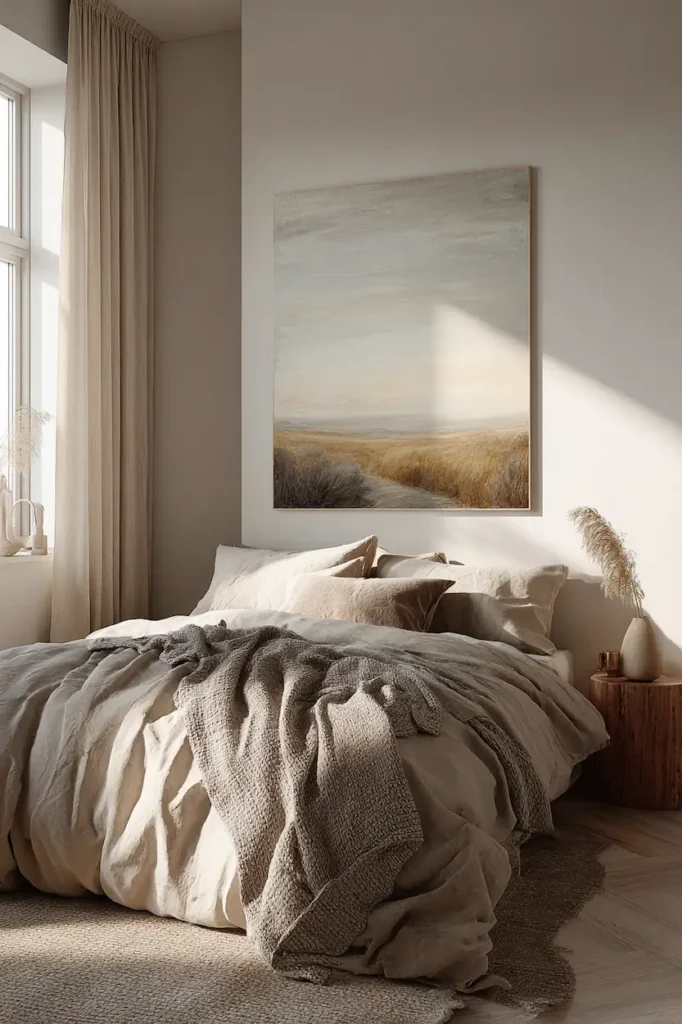
Bedrooms react differently to wall art scale.
Here, art should:
- Slow the eye
- Support rest
- Create emotional softness
Large horizontal art above the bed adds stability.
Vertical pieces beside the bed create rhythm and lightness.
More important than size itself is breathing space.
The wall should frame the artwork gently.
Silence around art is part of its beauty.
Narrow walls thrive with vertical formats
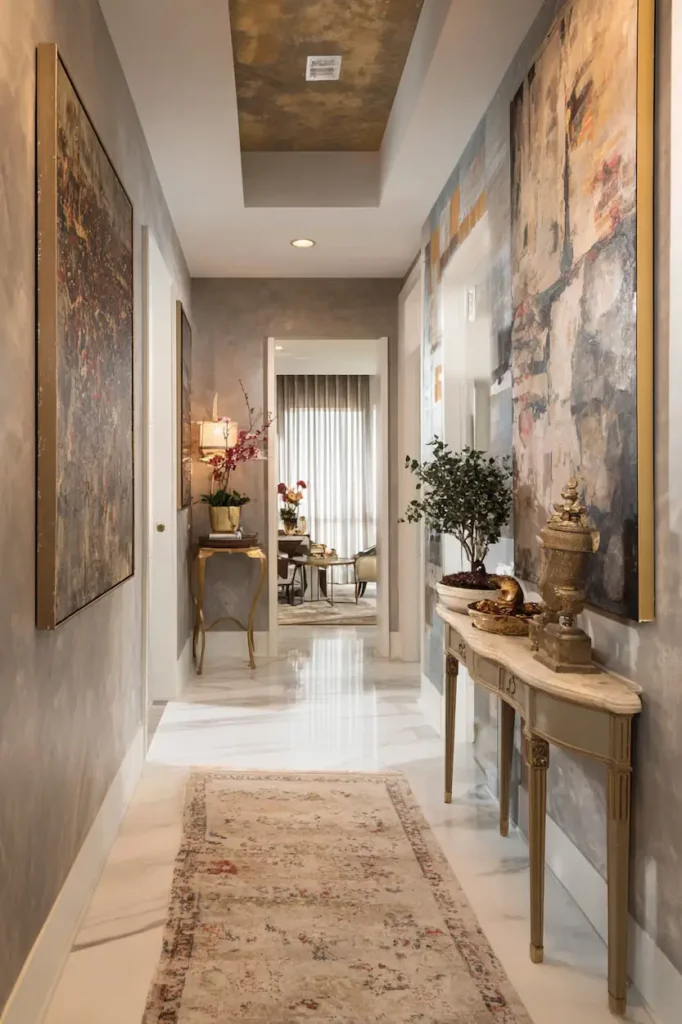
Tall, narrow walls are often overlooked.
They don’t want small frames stacked nervously.
They want vertical confidence.
Vertical wall art:
- Enhances height
- Adds architectural elegance
- Turns forgotten walls into focal moments
Hallways, staircases, reading corners —
these spaces come alive when art follows their vertical rhythm.
Wide walls ask for commitment, not caution
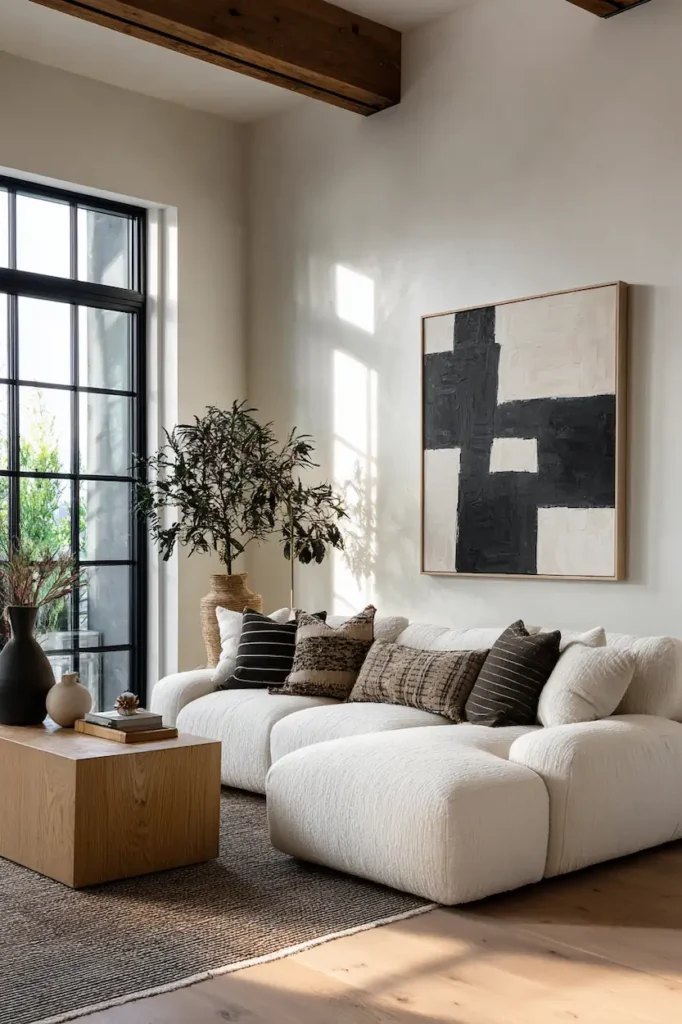
Wide walls are generous.
They need intention.
They respond best to:
- One large, grounded artwork
- Or a cohesive set of pieces with consistent spacing
What wide walls don’t forgive:
- Tiny frames scattered randomly
- Inconsistent alignment
- Visual indecision
A wide wall wants one clear visual sentence —
not a conversation that goes nowhere.
Empty space is part of the composition
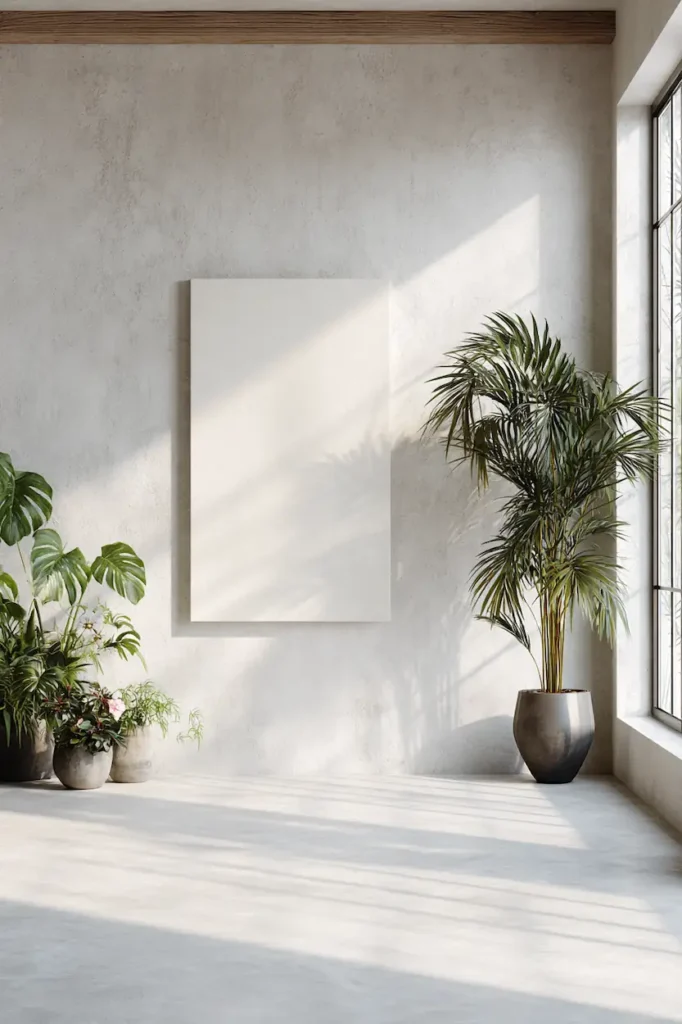
Negative space is not wasted space.
It allows:
- The artwork to breathe
- The wall to feel curated
- The room to feel lighter
When art is crowded, its impact disappears.
Let the wall participate in the composition.
Choosing size means choosing a feeling
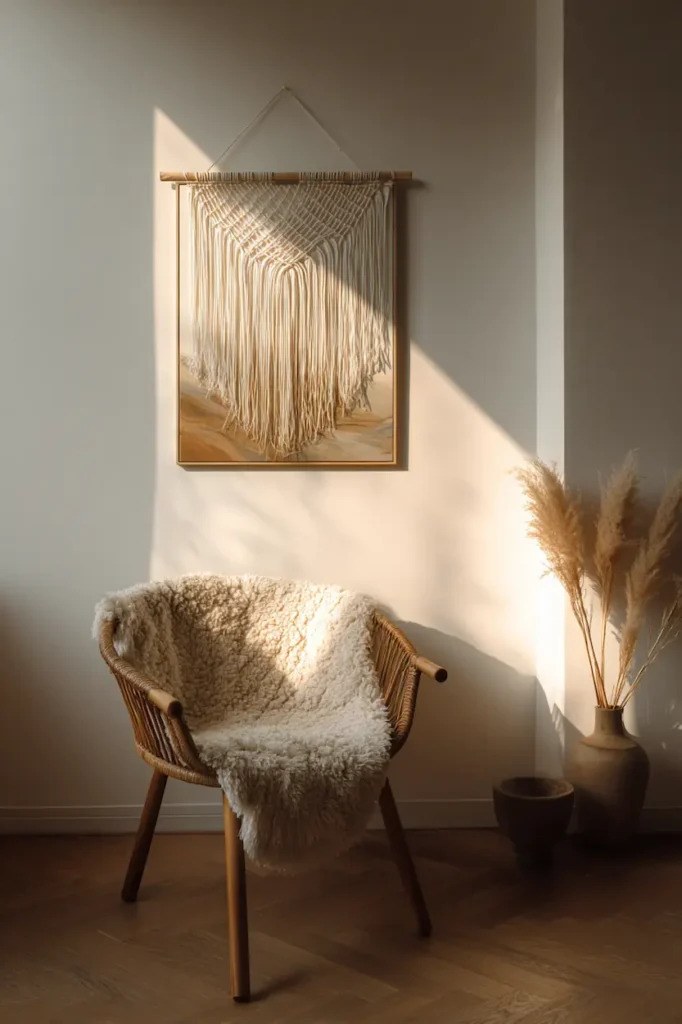
Before choosing dimensions, ask one simple question:
How do I want this wall to feel?
- Calm → fewer, larger pieces
- Energy → bold scale or strong rhythm
- Intimacy → closer proportions and softer presence
Walls remember emotion better than rules.
A wall where incorrectly sized artwork disrupts the balance of the room.
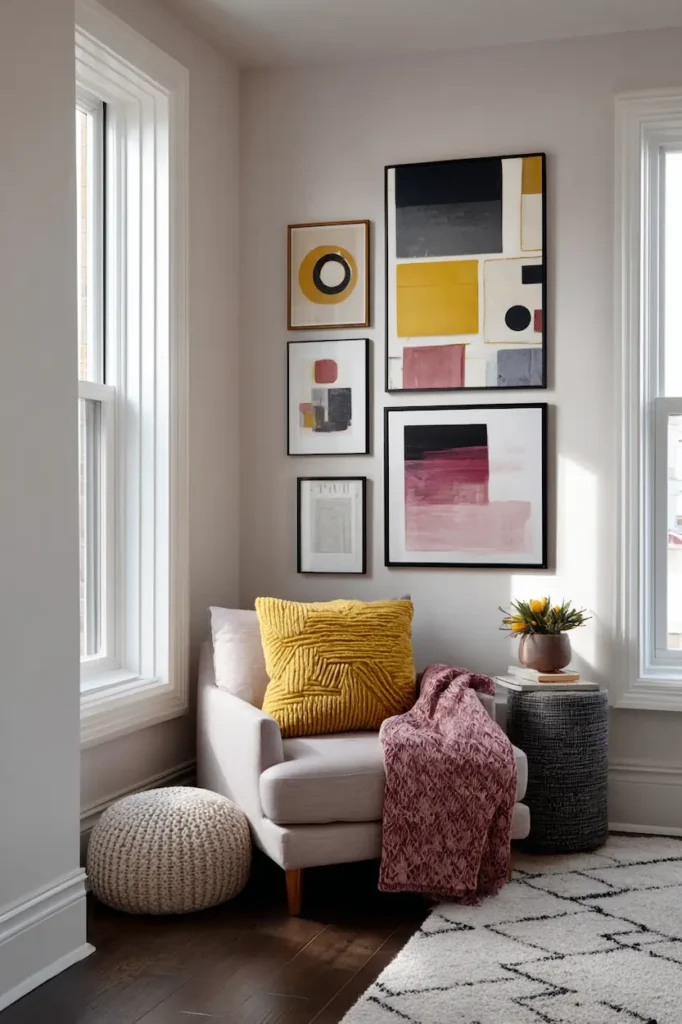
Avoid these subtle mood-breakers:
- Art that’s too small “just to fill something”
- Artwork floating too high above furniture
- Gallery walls without a clear anchor piece
- Choosing art before understanding the wall
Always start with the wall — not the artwork.
FAQ — questions people actually ask
Should wall art always be large?
Not always. But confidence matters more than caution.
Can I mix different sizes?
Yes, as long as one size clearly leads the composition.
Do I need exact measurements?
Enough to avoid mistakes — then trust your eye.
What if the wall feels empty at first?
That feeling often disappears once the scale is right.
Conclusion — seeing your wall differently
A wall is not waiting to be filled.
It’s waiting to be understood.
When the size is right,
the room feels settled.
Balanced.
Complete.
Take a step back.
Look again.
When the wall suddenly feels obvious —
you’ve found the right size.
This is the kind of idea you don’t scroll past.
You save it.
Once the size is right, proper placement becomes just as important. Even perfectly sized art can look off if it’s hung too high or unevenly. Following a few simple hanging wall art rules ensures your artwork looks intentional and well-positioned.